USAID DEC
Evaluation of the Bolivian food for development program : its institutional performance and impact on farmers 1979-1981
Sign inRURAL DEVELOPMENT SERVICES
Evaluation of the Bolivian food for development program : its institutional performance and impact on farmers 1979-1981
Evaluates P.L.
Hatch, John K.|Hanralian, Michael S. · 1982
Sign in to readA free account is required to download.
Abstract
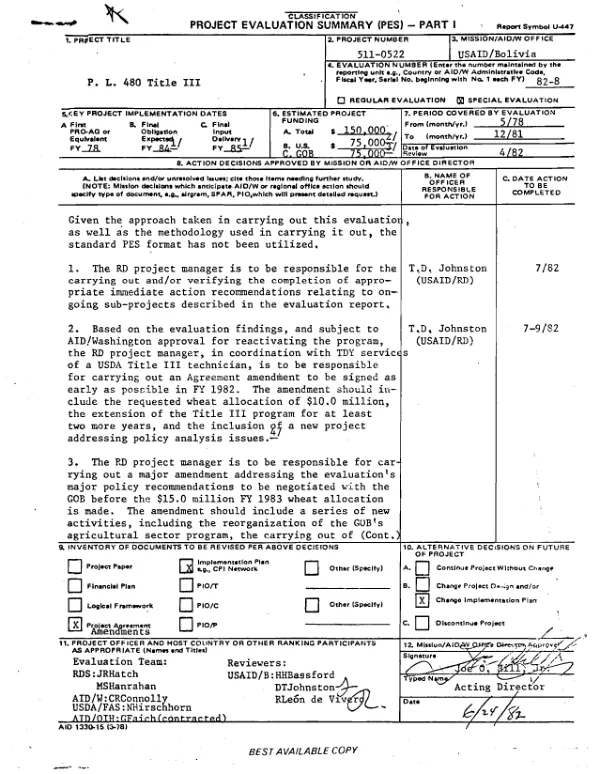
480, Title III food for development program in Bolivia. Special evaluation covers the period 5/78-12/81 and is based on a review of project documents, site visits, and interviews with project staff by a contracted team and on beneficiary interviews. Despite the problems noted below, the project is exemplary, exhibiting stellar management, speed, flexibility, local control, and the delivery of a high volume of services to the most deprived. The Project's Executive Secretariat is respected and is efficiently directing the project's 11 agricultural projects (Wheat Collection Centers, Integral Cooperatives, Colonization Roads, Agricultural Service Centers, Pesticide Control and Plant Quarantine, Rural Development [sponsored by Departmental Development Corporations - DDC], Community Conservation and Forestry, Expanded Agricultural Credit for Small Farmers, Secondary School Scholarships for Rural Students, Rural Development Studies); two nutrition projects (Communicable Diseases and Nutrition Improvement); and 74 subprojects. Campesinos view the project's impact positively, mostly in terms of increased incomes and yields, but also in terms of improved feelings of self-worth, welfare, security, and optimism for the future. The work of the DDC's has been especially noteworthy, and small projects have been surprisingly productive and cost-effective. Despite its success, the program's continuance beyond 1982 is questionable. Although internal shortcomings have been identified in four projects (Wheat Collection, Integral Cooperatives, Colonization Roads, and Agricultural Service Centers), the most pressing problems have been external - a 1980 coup and the consequent cutoff in U.S. wheat shipments, the collapse of counterpart funding due to political stability, an inflation rate of 60-90%, two currency devaluations, and USAID/B's failure to authorize the deposit of local currency in interest-bearing accounts, which cost the project $10 million. The principal recommendation calls for the immediate "unfreezing" of Title III assistance and a project extension through 12/84.