USAID DEC
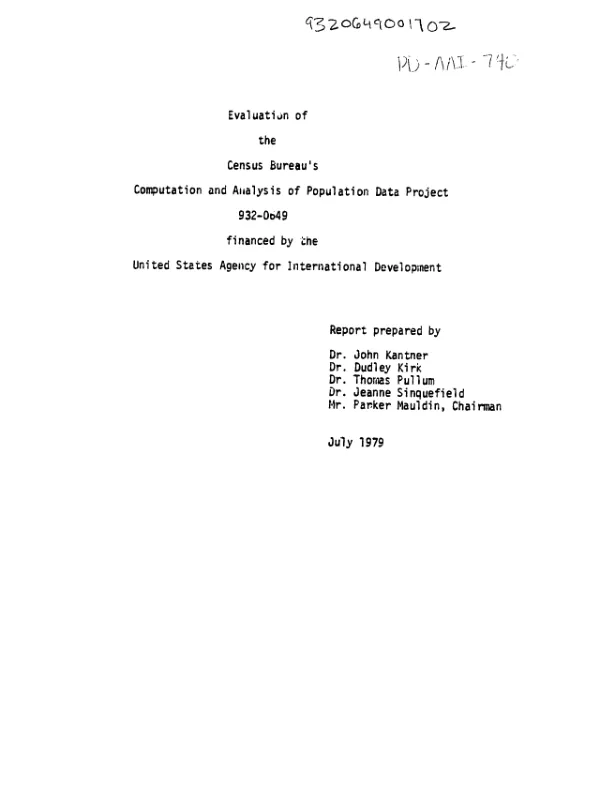
Evaluation of the Census Bureau's computation and analysis of population data project
Sign inAMERICAN PUBLIC HEALTH ASSOCIATION
Evaluation of the Census Bureau's computation and analysis of population data project
Evaluates project implemented by the U.S.
Kantner, John F.|Kirk, Dudley · 1979
Sign in to readA free account is required to download.
Abstract
Census Bureau (BUCEN) to develop and maintain a comprehensive demographic data base for use by USAID's. Evaluation covers the period l978-l979 and is based on document review and interviews with project and other concerned personnel. BUCEN's data base is of high-quality, is easily accessible and regularly updated, and uses universal standards. However, BUCEN does not apply the same criteria to all countries; favors census data over other, more reliable data (e.g., prevalence of contraceptive use); computes the data solely in terms of the UN's Age-Sex Accuracy Index; and adjusts data, often heavily and in a highly complex manner, to arrive at internal consistency. The results are mixed. Data in the country profiles (CP) found in World Population 1977, for example, while generally consistent (despite anomalies) and free of serious error, are not easily comparable to data from other reputable sources; and key discrepancies exist between BUCEN and A.I.D. estimates of crude birth rates. Other problems include the dubious value of BUCEN's use of long-term projections for short-term estimates and of its adjusted data on infant mortality reductions. While BUCEN has generally fulfilled its contractual obligations, it has fallen behind in the production of CP's. Poor A.I.D./BUCEN working relations seem to lie behind A.I.D.'s complaint that BUCEN neglects A.I.D.'s needs in favor of other requests. Future issues of World Population should include crude birth and death rates and population estimates for the year issued and a year or two beyond. The CP's should be modified to: (1) reflect the country's size and importance and include data on large cities; (2) include a summary analysis of demographic levels and trends, placing the country in its regional context, relating the data to changes in socioeconomic development and the availability of family planning and other services; (3) reduce adjustments and make data presentation more flexible; (4) use simpler extrapolations for short-term projections; (5) reduce publication time; (6) employ one or two reviewers to assure a more thorough professional review; (7) reduce delays in data processing through more staff trips to specific countries; and (8) devote more time to urban growth, manpower problems, and methodological innovations.