THE LOUIS BERGER GROUP, INC.
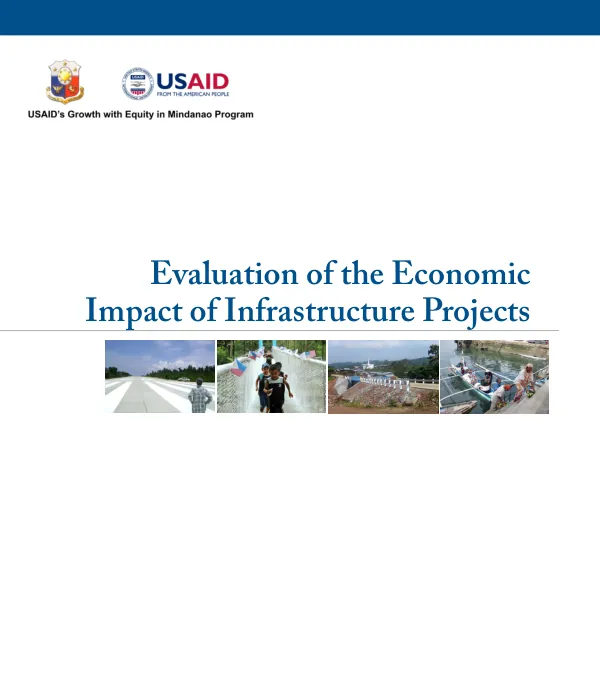
Evaluation of the Economic Impact of Infrastructure Projects
The economic impact of infrastructure projects in the Autonomous Region in Muslim Mindanao (ARMM) and other conflict-affected areas in Mindanao was evaluated by the Institute for Socio-Economic Development Initiatives (ISFI) of Ateneo de Davao University.
2011 · 51 pages
Sign in to readA free account is required to download.
Abstract
The study was conducted at the request of the United States Agency for International Development (USAID)/Philippines, which designed the assessment and was consulted frequently during its implementation. The study found that a peso invested in USAID/GEM's Regional Infrastructure Program (RIP) category of projects returned 2.59 pesos in benefits, while a peso invested in the Barangay Infrastructure Program (BIP) category of projects returned 2.00 pesos in benefits. The highest economic returns were generated by roads and bridges under both the GEM 2 and GEM 3 programs. The study used a discount rate of 12% to assess the economic impact of the projects, which is the rate used by the World Bank and the Asian Development Bank to judge the viability of projects. The study sampled 1,100 infrastructure projects constructed under GEM 2 and GEM 3, and used a stratified random sample to select projects for analysis. The sample was stratified by concentration of projects, type of projects, size of projects, and by those projects constructed in high-conflict and moderate-conflict areas of Mindanao. The study used the Net Present Value approach to assess the economic impact of each project, and also tested the projects using benefit-cost ratios. The study found that barangays where GEM infrastructure is located have lower levels of violence than barangays without GEM infrastructure. The study also found that the GEM infrastructure had positive impacts on the incomes of households in the barangays where the infrastructure is located. The study did not attempt to assess social or diplomatic benefits associated with the infrastructure. The study used a discount rate of 12% to assess the economic impact of the projects, which is the rate used by the World Bank and the Asian Development Bank to judge the viability of projects. The study also used a benefit-cost ratio to assess the economic impact of each project, and found that the benefits of the projects exceeded the costs in most cases. The study's results show that the GEM infrastructure had a positive impact on the economy of the ARMM and other conflict-affected areas in Mindanao. The study's findings suggest that investing in infrastructure projects can have a significant impact on the economy and can help to reduce poverty and improve living standards. The study's methodology involved collecting data on a stratified random sample of infrastructure projects constructed under GEM 2 and GEM 3. The data was collected through surveys of households and businesses, as well as through focus group discussions. The data was then analyzed using statistical methods to assess the economic impact of each project. The study's results have important implications for policymakers and development practitioners. The study's findings suggest that investing in infrastructure projects can have a significant impact on the economy and can help to reduce poverty and improve living standards. The study's results also suggest that the GEM infrastructure had a positive impact on peace and order conditions in the ARMM and other conflict-affected areas in Mindanao. The study's methodology and results are consistent with the goals and objectives of the GEM program, which aims to promote economic growth and development in the ARMM and other conflict-affected areas in Mindanao. The study's findings suggest that the GEM program has been successful in achieving its goals and objectives, and that the program has had a positive impact on the economy and on peace and order conditions in the region.