USAID. MISSION TO BANGLADESH
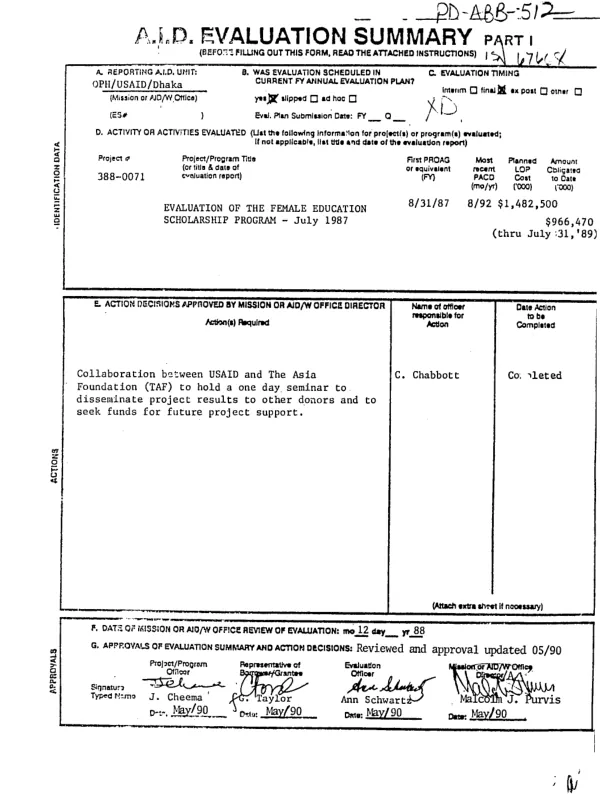
Evaluation of the female education scholarship program -- July 1987
Summarizes final evaluation (XD-ABB-512-A) of a project to test the impact of providing secondary school scholarships to Bangaldeshi girls on age of marriage and use of contraceptives.
1990
Sign in to readA free account is required to download.
Abstract
External evaluation covered the period 8/84-7/87. The project had a dramatic impact on the behavior and status of more than 20,000 beneficiaries. The dropout rate for female secondary students declined from 14.7% to 3.7%, leading to a two- year increase in the average marriage age. Nearly 40% of secondary school graduates were using modern contraceptives, compared with only 27.6% of those who dropped after sixth grade. Early indicators suggest that the number of children born to those who completed secondary school is lower on average than for those who did not. Secondary education also raised the status of beneficiaries, as reflected in better treatment by their families, husbands, and mothers-in-law; enhanced employment opportunities; and reduced or waived dowries. Schools attended by the beneficiaries were superior in terms of teacher qualifications and facilities. implementing agency -- The Asia Foundation -- was critical to project success. On the negative side, the impact of the participant selection criteria was mostly negative. Introduced midway into the project, the criteria increased administrative costs and disqualifed formerly eligible students, causing ill feelings in the communities. The major lesson learned is that the provision of female secondary education produces benefits which extend beyond the demographic behavior of women.
Connected topics