USAID DEC
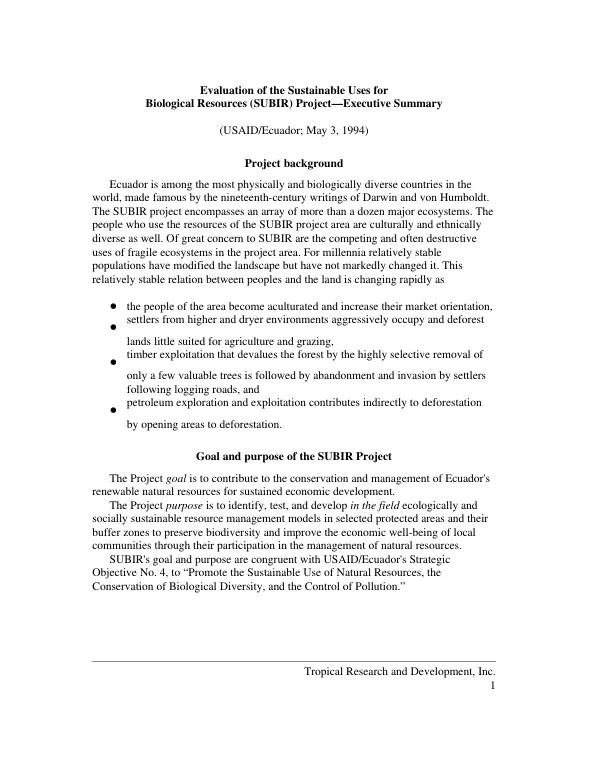
Evaluation of the sustainable uses for biological resources (SUBIR) project -- executive summary
Sign inTROPICAL RESEARCH AND DEVELOPMENT, INC.
Evaluation of the sustainable uses for biological resources (SUBIR) project -- executive summary
Evaluates project to develop sustainable natural resource management (NRM) models in selected protected areas of Ecuador and their buffer zones (SUBIR project).
1994
Sign in to readA free account is required to download.
Abstract
Interim evaluation covers Phase I of the project (3/92-5/94). The project is being implemented by a PVO consortium headed by CARE/Ecuador. Much has been accomplished. (1) With SUBIR's help, Ecociencia has become Ecuador's premier biological research and training institution capable of supporting not only Phase II of SUBIR but similar initiatives elsewhere. SUBIR/Ecociencia research has yielded considerable baseline data on the biological resources of project sites and has served as a fertile training ground for scientists and community parabiologists. (2) The paralegal program trains and assists local people in community laws and legal advocacy on issues such as land titling and natural resource access rights. SUBIR is strengthening second-level organizations to test and extend sustainable uses of biological resources. "Guardaparques comunitarios" bolster a weakened park protection system with assistance from SUBIR and second-level organizations. (3) SUBIR has made significant strides in opening channels of communication between environmental groups and natural resources related industries, particularly with Endesa/Botrosa in timber and Maxus in oil exploration. These linkages, combined with SUBIR field efforts, demonstrate promise for improving private management of resources and the NRM policy environment. (4) The project's geographical focus is particularly conducive to the conservation of ecosystem diversity. SUBIR has focused on three protected areas and their buffer zones that encompass an array of more than a dozen distinct ecosystems from Pacific mangroves through cloud forests, paramos, and the forests of the Amazon. Yet serious problems exist which must be addressed before embarking on Phase II. (1) The assumption by the Consortium Executive Committee of project management oversight and policy guidance has proved unworkable -- the Project Implementation Committee and the Consortium Executive Committee have come to play virtually the same role, resulting in confusion and delays. Legitimate interventions by USAID/Ecuador have been frustrated. (2) Though CARE is the lead institution, some members of the Consortium prefer to handle hiring and salary issues separately. The Project Coordinator at times received directions from the Consortium Executive Committee, USAID, and CARE/ Ecuador. These different chains of authority have led to management frustration, created confused signals, and contributed to high turnover, from the coordinator down through the project field staff. (3) At one point, SUBIR was carrying out more than 300 activities. This number was subsequently scaled back, but draft 1994 work plans are still unrealistic. (4) Though staff have some inherent sense of what has and has not worked and why, there is no systematized way of accessing and analyzing data about project activities. SUBIR is not yet able to function as the learning institution it was intended to be in the Project Paper. Lessons learned include the following. (1) When many international NGOs are involved in project design and implementation, summing up their different concerns and interests does not necessarily result in the best project. (2) Not involving local NGOs and other relevant stakeholders in project design and implementation causes friction and limits local support for project objectives. (3) Mutual expectations and obligations for counterpart agencies and other institutional participants should be made clear at the outset. (4) Project management and governance structure is critical, especially when several entities are involved in project design and implementation. (5) Dialogue must be promoted among the various, and potentially conflictive interests of the various NRM groups, recognizing their legitimate interests if sustainable use is to be approximated. (6) Effective model building and testing of integrated approaches to NRM best occurs when focused on a limited but representative geographic area where impacts can be monitored and analyzed. (7) The low priority accorded biodiversity conservation, together with the lack of adequate financial resources and trained professionals, implies that SUBIR-like projects will be needed on an expanded scale with multidonor support for many years, complemented by programs that increase economic well-being and environmental awareness among rural populations.