USAID DEC
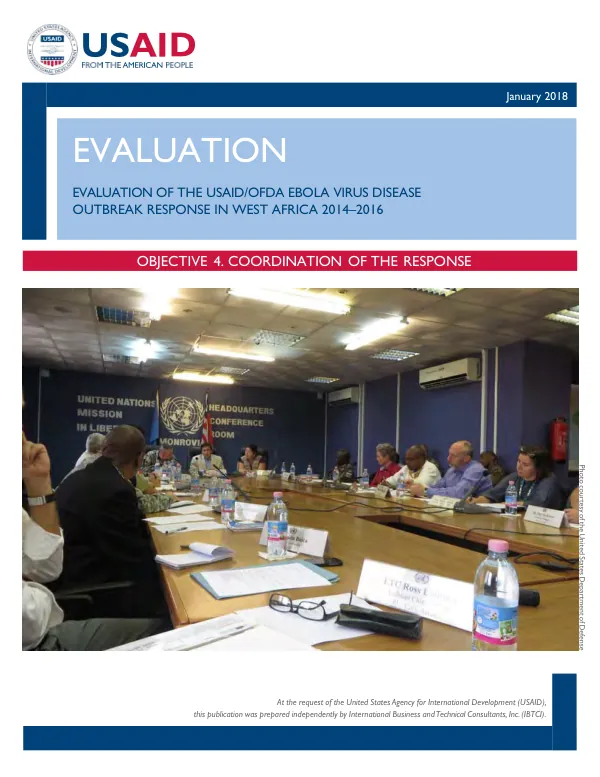
Evaluation of the USAID/OFDA Ebola Virus Disease Outbreak Response in West Africa 2014-2016: Objective 4, Coordination of the Response
Sign inINTERNATIONAL BUSINESS AND TECHNICAL CONSULTANTS, INC.
Evaluation of the USAID/OFDA Ebola Virus Disease Outbreak Response in West Africa 2014-2016: Objective 4, Coordination of the Response
The USAID/OFDA Ebola Virus Disease Outbreak Response in West Africa 2014-2016 was a comprehensive humanitarian effort aimed at containing the spread of the disease and providing critical assistance to affected communities.
2018 · 268 pages
Sign in to readA free account is required to download.
Abstract
The response was led by the United States Agency for International Development (USAID) and involved a range of international partners, including non-governmental organizations (NGOs) and local governments. The evaluation of the response, conducted by International Business and Technical Consultants, Inc. (IBTCI), focused on Objective 4: Coordination of the Response. This objective aimed to assess the effectiveness of the coordination mechanisms put in place to support the response efforts. The evaluation team conducted a thorough analysis of the response, including interviews with key stakeholders, focus group discussions, and surveys of affected communities. The evaluation found that the coordination mechanisms in place were generally effective in supporting the response efforts. The United States Agency for International Development (USAID) played a key role in coordinating the response, working closely with international partners and local governments to ensure a unified and effective response. The evaluation team noted that the coordination mechanisms were particularly effective in Guinea, where the response was led by the government and supported by international partners. However, the evaluation also identified some challenges in the coordination of the response. In Liberia, for example, the evaluation team found that the coordination mechanisms were less effective, leading to delays and inefficiencies in the response. The evaluation team attributed these challenges to a lack of clear communication and coordination between international partners and local governments. The evaluation team made several recommendations to improve the coordination of the response in future outbreaks. These recommendations included the need for clearer communication and coordination between international partners and local governments, as well as the establishment of more effective mechanisms for sharing information and resources. The evaluation of the USAID/OFDA Ebola Virus Disease Outbreak Response in West Africa 2014-2016 provides valuable insights into the effectiveness of the coordination mechanisms put in place to support the response efforts. The evaluation highlights the importance of clear communication and coordination between international partners and local governments, and provides recommendations for improving the coordination of the response in future outbreaks. The evaluation team conducted a thorough analysis of the response, including interviews with key stakeholders, focus group discussions, and surveys of affected communities. The evaluation found that the coordination mechanisms in place were generally effective in supporting the response efforts, but identified some challenges in the coordination of the response in Liberia. The evaluation team made several recommendations to improve the coordination of the response in future outbreaks, including the need for clearer communication and coordination between international partners and local governments. The evaluation of the USAID/OFDA Ebola Virus Disease Outbreak Response in West Africa 2014-2016 highlights the importance of effective coordination in responding to complex humanitarian crises. The evaluation provides valuable insights into the challenges and successes of the response, and provides recommendations for improving the coordination of the response in future outbreaks.
Related documents
Documents in this collection
 2018
2018USAID DEC
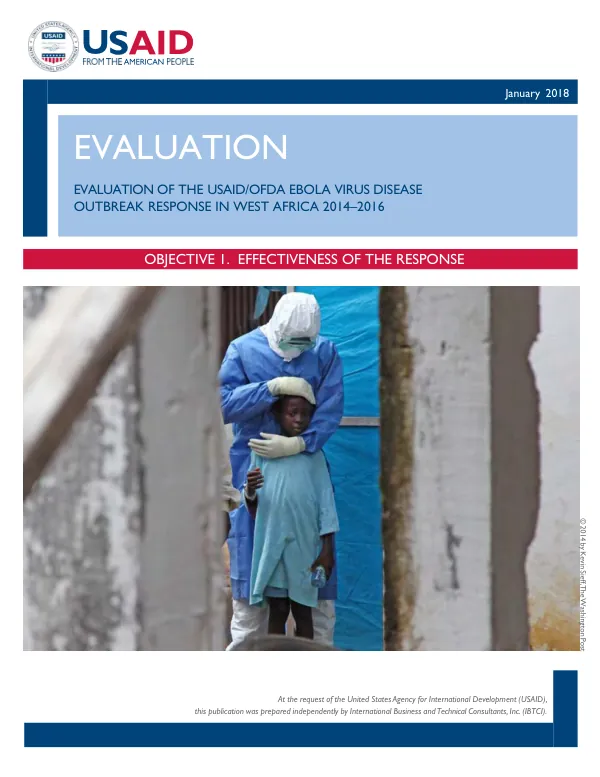
Evaluation of the USAID/OFDA Ebola Virus Disease Outbreak Response in West Africa 2014-2016: Objective 1, Effectiveness of the Response
Open record 2018
2018USAID DEC