HIMALAYAN STUDIES CENTRE
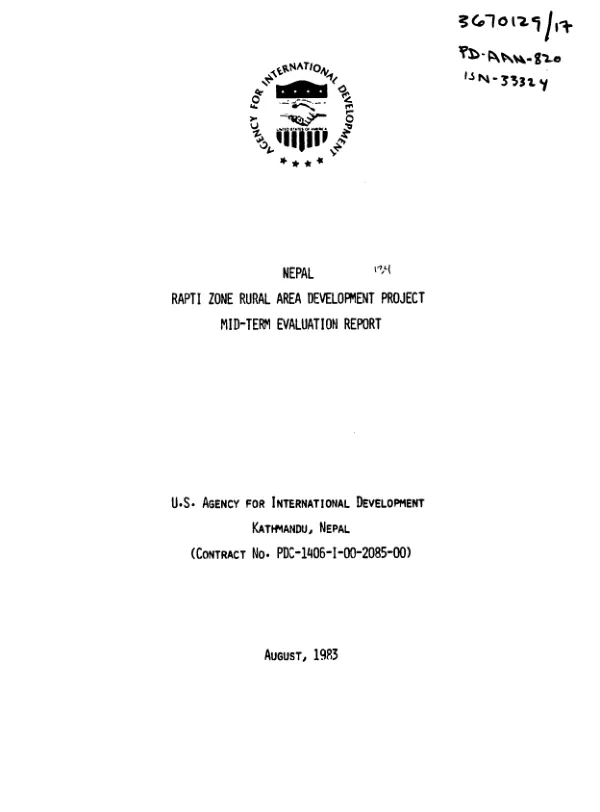
Evaluation of USAID village development project in Nepal (1954-1962)
Evaluates a village development project (VDP) to raise the standard of living of the rural poor by creating infrastructure, providing local services and trained personnel, encouraging local industries, and promoting participatory institutions.
1980
Sign in to readA free account is required to download.
Abstract
Evaluation covers the period 1954-1962 and is based on interviews with 260 villagers and 20 VDP workers. The multi-faceted project included programs in construction (roads, schools, potable water and waste facilities), irrigation (wells, pumps, canals), agriculture (seeds, fertilizer, tools, demonstration farms, animal husbandry), health (dispensaries, immunization, sanitation), education (school buildings, libraries), training (for village workers and technical staff, home economics for women), and institutional development (co-ops, village committees, youth groups). The project was constrained by traditional villager apathy, difficult access to rural areas, lack of transportation and village leadership, the introduction of the Indian Aid Mission (which diverted the project focus), and lack of skilled manpower. The project lacked emphasis on helping the most disadvantaged and there was poor coordination between departments and agencies, as well as a lack of consistent monitoring and evaluation. The VDP nevertheless motivated the villagers to mobilize local resources, and inspired traditional village leaders to support the VDP. Channels of communication were opened among villagers and between villagers and government, giving the people a heightened sense of identity and social consciousness. Trained and dedicated administrative and technical staff smoothed the transition in 1962 from the VDP to the Panchayat Development Program. Tangible benefits included trails and bridges, vegetable farms, wells, canals, and potable water supplies. The VDP's greatest successes occurred in agriculture, mass education, and health services. The VDP had a greater impact in the hilly regions and in eastern Nepal. Overall, the VDP represented a turning point in the relationship of the government to the rural people, where the government was seen as a provider as well as a taxation instrument.