ACADEMY FOR EDUCATIONAL DEVELOPMENT, INC. (AED)
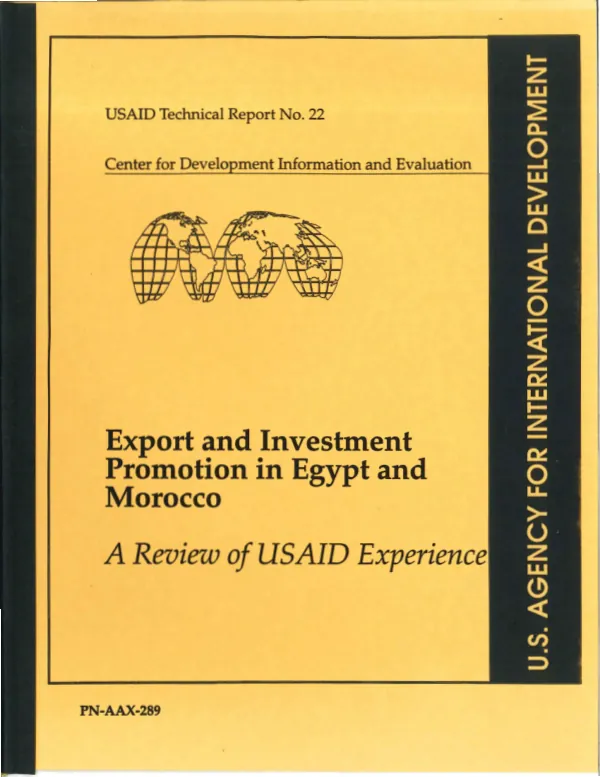
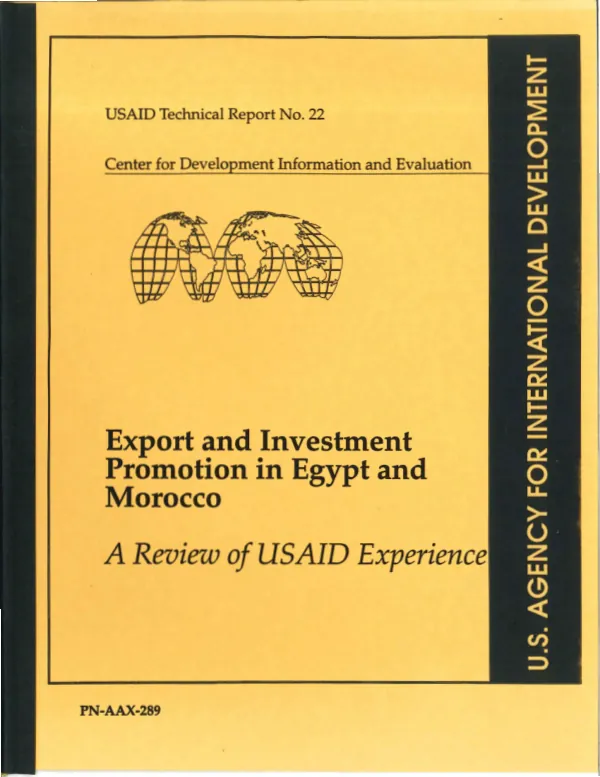
Export and investment promotion in Egypt and Morocco : a review of USAID experience
This report, based on a desk review of project documentation, synthesizes USAID's export promotion (mostly in Morocco) and investment promotion (in Egypt) experience in the 1980's.
Wichterman, Dana · 1994
Sign in to readA free account is required to download.
Abstract
Findings include the following. (1) The performance of export and investment promotion projects is closely linked to a country's policy regime. Egypt's poor policy environment was one of the main reasons USAID interventions failed to promote foreign investment, whereas Morocco's significant reforms liberalizing trade created an enabling environment for USAID's efforts to increase firm-level exports. USAID should not pursue export or investment promotion in countries where the policy environment is unfavorable. (2) Before intervening in the services-provider market, USAID should first determine if there is sufficient market failure to justify action. (3) Private sector intermediaries are more responsive than public sector institutions. USAID should work through private sector intermediaries as much as possible. (4) Investment promotion activities in Egypt were not cost effective, but export promotion activities in Morocco were. Cost effectiveness analysis is an important component of project monitoring and evaluation. (5) Accurate evaluations require adequate data collection, including baseline and life-of-project data. Data collection was inadequate in Egypt. Includes bibliography.
Connected topics