USAID. MISSION TO KENYA
Family planning project
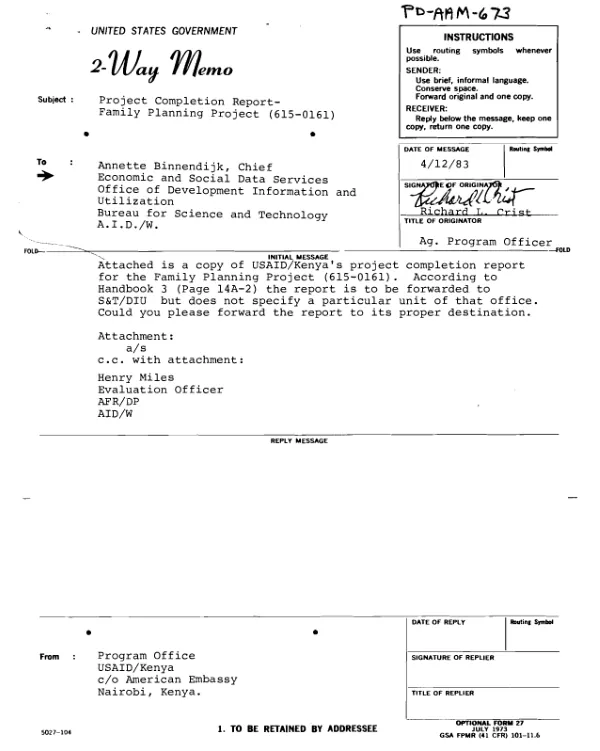
Provides final Mission report (6/74-6/79) on a project to develop a national system in Kenya capable of recruiting substantial numbers of family planning (FP) acceptors.
1983
Sign in to readA free account is required to download.
Abstract
Project objectives were not achieved. The target for FP acceptors was reduced from 640,000 to 450,000 at project mid-term, but only 310,000 were finally recruited. While 364 of 400 planned FP service delivery points were set up, only 40% of the 950 nurses trained in FP were posted at them. A total of 750 of a targeted 817 family health field educators (FHFE's) were trained, but were inadequately supported and supervised and did not provide the envisioned community FP outreach. Clinical officers in charge of rural health centers did not receive FP training, and the Ministry of Health (MOH) eliminated a program to train 92 supervisors for community nurses and FHFE's, leaving the supervision of FP activities to 46 already overworked provincial and district matrons. The 17 mobile units organized were ineffective because vehicles and staff were often diverted to other health activities. A National Family Welfare Center with 19 employees was established within the MOH, but key posts were not filled and the Center did not become influential enough to initiate a national FP program. Inputs provided to the MOH's Health Education Unit for conducting an FP information and education program were used for other purposes. More positively, the project led to a substantial increase in the number of clients requesting and receiving maternal/child health services. Shortfalls were due both to the lack of demand for FP services and to the inadequate quantity and quality of the MOH's FP services. External negative factors included the lack of political support for FP, the MOH's managerial and organizational deficiencies and its lack of commitment to FP, and a socioeconomic and cultural bias toward large families. The project taught the need to: focus on changing family size norms and attitudes about FP; appraise host government commitment to project objectives and incorporate realistic assumptions in project designs; emphasize activities designed to foster a clear understanding of population and FP issues by leadership groups; and involve several government and/or private sector agencies in FP projects.
Related documents