 1990
1990USAID DEC
USAID. MISSION TO RWANDA
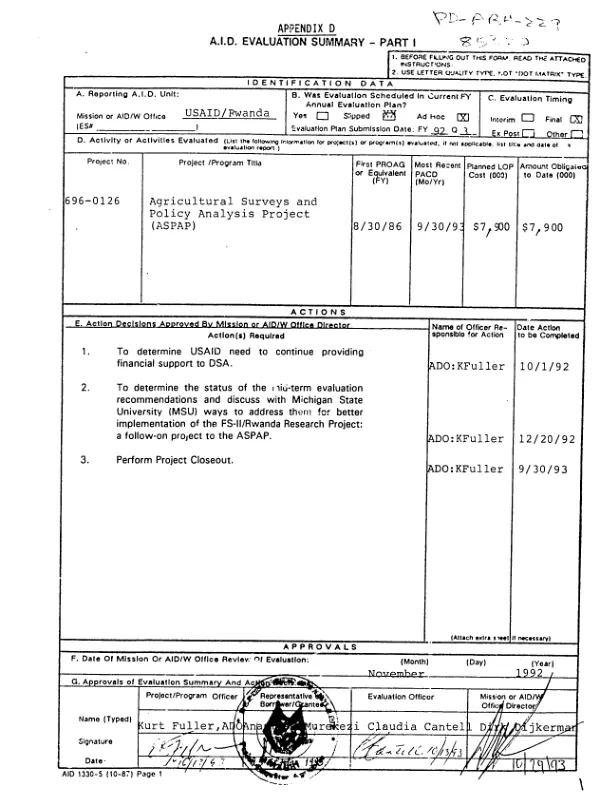
Evaluates project to train blacksmiths to repair and manufacture farm implements in Rwanda.
Chiavaroli, Eugene; Appolinaire, Balihuta · 1983
Abstract
Final PES covers the period 3/78-12/82 and is based on interviews with trainees and staff of the Nyabisindu Training Center and government officials. The project expanded and renovated an existing blacksmith training center and conducted three 9-month training courses, graduating 66 persons. While the training was a success from the technical point of view, project objectives were not fully achieved. Only 23 of the graduates traced were using the skills they had acquired in training, and of these, only 2 worked in a rural forge; 14 were teaching the trade. It appears that these 23 graduates represent the majority, if not the total number, of Nyabisindu graduates practicing their trade. Several factors have worked to discourage center graduates from practicing blacksmithing - difficulties in obtaining metal in rural areas, possible lack of motivation (trainees were not required to have an aptitude for blacksmithing, or to pay any sort of training fee), and most important, lack of a market for forge products, which must compete with higher quality, less expensive, imported tools. The blacksmiths could benefit from more organizational support, preferably at the prefecture level; in addition, they could be reoriented toward more favorable markets (e.g., for decorative items), including those in urban areas. Future training projects should: (1) undertake a marketing survey to study supply and demand factors, including a comparison of price/quality of local products versus imported items; (2) make admission requirements more stringent to identify motivated trainees; and (3) provide follow-up services, including logistical support after graduation, refresher courses, and assistance in obtaining materials and in marketing products. An action decision directs that remaining input items (furniture, tools) be transferred to other projects as needed.
Connected topics
Classification