ABT ASSOCIATES
Feed the Future Cambodia Harvest II FY21 Work Plan
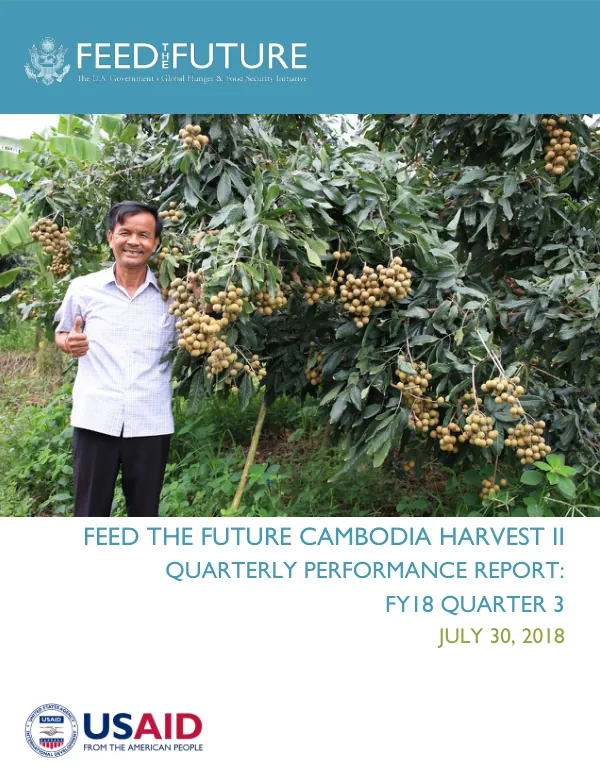
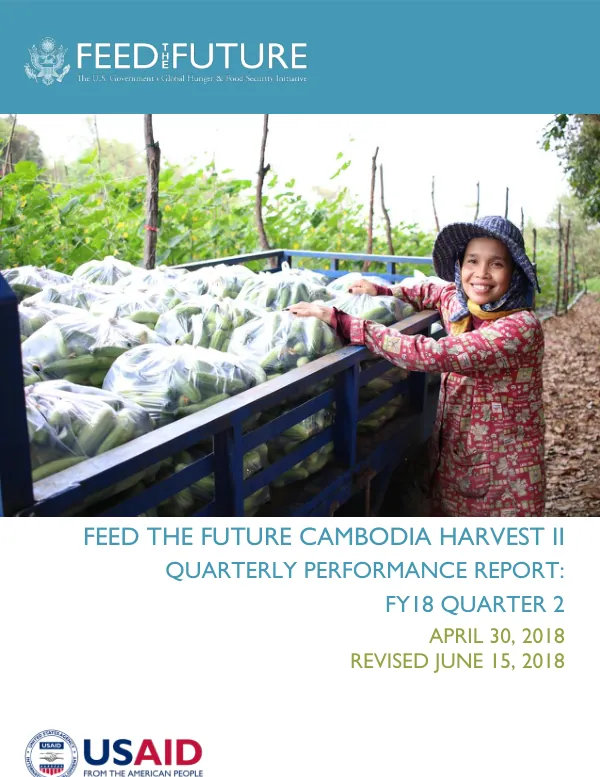
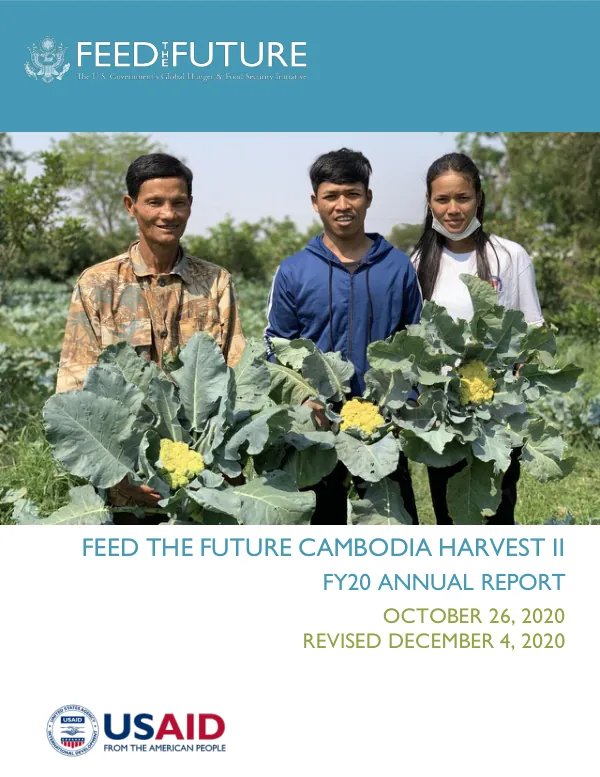
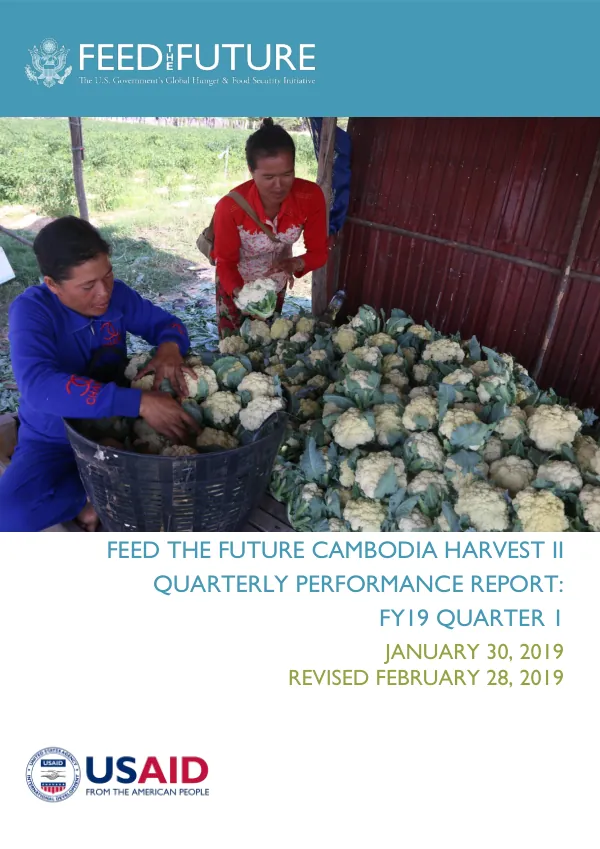
Feed the Future Cambodia Harvest II is a project aimed at accelerating growth of the horticulture sector in the provinces of Pursat, Battambang, Siem Reap, and Kampong Thom, with a focus on four subsectors: vegetable, mango, longan, and cashew.
2020 · 59 pages
Sign in to readA free account is required to download.
Abstract
The project seeks to improve capacities for market participation, improve market linkages, and improve governance and the enabling environment. The project employs a unique strategy that blends a buyer-led approach with a market systems development (MSD) approach. This involves working with horticultural buyers as a key entry point to the market system, as well as engaging a range of market actors to identify and address broader systemic constraints. The project has three interconnected sub-purposes: improving capacities for market participation, improving market linkages, and improving governance and the enabling environment. To achieve its objectives, Harvest II works with buyers, producers, and other actors to increase financial and business capacity, stimulate the use of market information to inform business decisions, and expand financial opportunities. The project also engages other market actors, including financial institutions, input supply companies, and other private sector firms, to strengthen coordination across value chains and increase investment in the sector. Harvest II partners with government entities, the private sector, and civil society organizations to strengthen opportunities for advocacy and public-private dialogue. The project also helps build government capacity to address stakeholder constraints and foster inclusive horticulture sector growth. The project's approach is designed to be flexible and adaptable, with the ability to consider opportunities in provinces outside the initial Zone of Influence (ZOI) on a case-by-case basis. The project's work plan for FY21 is focused on achieving the following key results: * Improved capacities for market participation, including increased financial and business skills, access to market information, and financial opportunities. * Improved market linkages, including the creation of linkages between value chain actors, market incentives for private sector engagement and investment, and improved market chain coordination. * Improved governance and the enabling environment, including strengthened horticulture sector advocacy and coordination platforms, improved government capacity to address horticulture constraints, and encouraged public-private dialogue. The project's implementation will be guided by a range of performance indicators, including metrics related to financial and business capacity, market information, financial opportunities, market linkages, and governance and the enabling environment. The project will also engage in regular monitoring, evaluation, and learning activities to ensure that it is meeting its objectives and making progress towards its goals.