USAID DEC
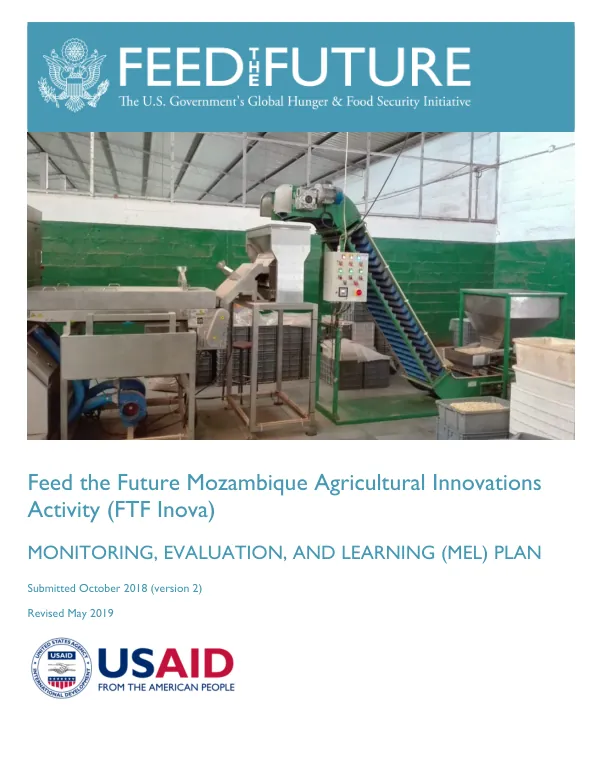
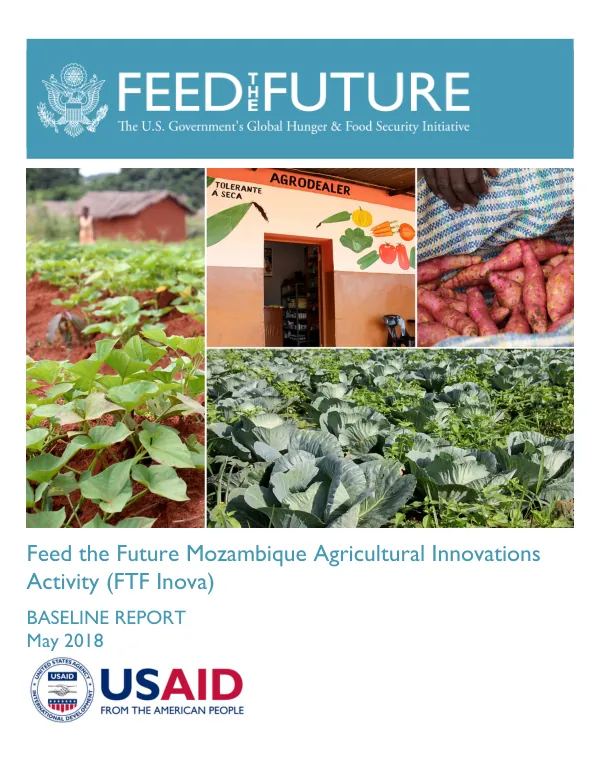
Feed the Future Mozambique Agricultural Innovations Activity (FTF Inova): Baseline Report
Sign inDAI GLOBAL, LLC
Feed the Future Mozambique Agricultural Innovations Activity (FTF Inova): Baseline Report
The Feed the Future Mozambique Agricultural Innovations Activity (FTF Inova) is a five-year program that takes a market systems approach to increase equitable growth of the Mozambican agriculture sector.
2018 · 70 pages
Sign in to readA free account is required to download.
Abstract
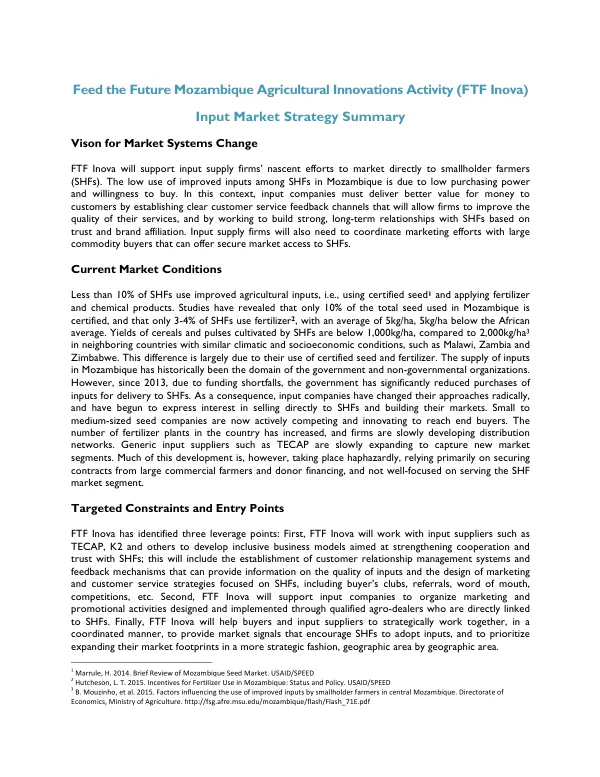
The program aims to catalyze continual strengthening of relationships and linkages between market actors throughout the agricultural market system. FTF Inova uses a portfolio approach to market systems development, beginning by looking at all system actors to understand the dynamics, incentives, social norms, interconnected services, and policy structures influencing them. The program identifies smallholder farmers who are not optimally reached by the market but have the potential to improve their position if linked to growth-oriented market systems. FTF Inova strives to create enduring change in the underlying dynamics of the market system it works within to increase competitiveness and expand markets and trade to reduce poverty. The program maintains an iterative Activity results chain reflecting the dynamic relationship between interventions and the Activity's vision for systems change. A set of custom market system indicators have been developed to monitor the health of the system and provide information about how the system may shift over time. These indicators include measures of behaviors and expectations, relationships, women's decision-making ability, and levels of innovation. Interactions between system actors give rise to emergent behaviors that are more than the sum of individual actors' behaviors and relationships. The market system indicators are designed to investigate long-term shifts in behaviors and expectations that appear consistently over time. Based on an MSD approach, interventions are developed on a case-by-case basis and intended beneficiaries, partners, and other stakeholders are identified during intervention design. Baseline measures are then taken for each intervention on a rolling basis. This baseline study is the reference point for measuring change against market system indicators. Market system indicators are not baselined on an intervention-by-intervention basis. This report presents a snapshot of the current status of each intervention indicator, providing the necessary context to make sense of change measured on intervention indicators over the life of the Activity. FTF Inova uses a mixed methods approach to measure change, combining qualitative and quantitative methods to gather data. The baseline study uses the Agricultural Market Systems Change Wheel as a basis for its qualitative sample strategy, conducting in-depth interviews with actor types within the market systems of supply chain management, input and output markets, and value chain actors. The program's goal is to increase the competitiveness of target value chains, strengthen commercial relationships, and expand access to agriculture markets and trade. FTF Inova aims to create a more inclusive and sustainable agriculture-led economic growth in Mozambique. The program's impact is expected to be felt across the country, with a focus on smallholder farmers who are not optimally reached by the market but have the potential to improve their position if linked to growth-oriented market systems. The baseline study provides a comprehensive overview of the Mozambican agricultural market system, highlighting the strengths and weaknesses of the system. The study identifies areas where the market system is functioning well and areas where it is not, providing a foundation for the program's interventions. The findings of the baseline study will be used to inform the program's interventions and to measure progress over the life of the Activity.
Related documents