USAID. BUR. FOR LATIN AMERICA. OFC. OF DEVELOPMENT RESOURCES
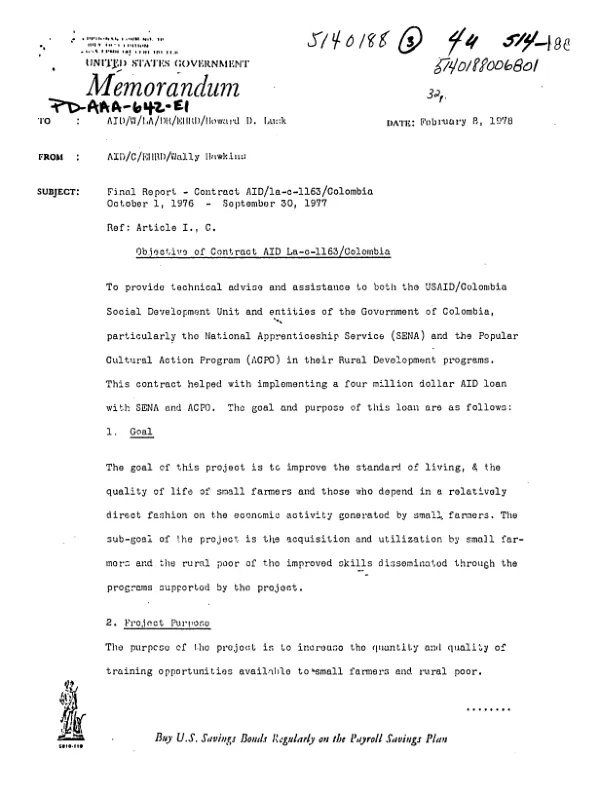
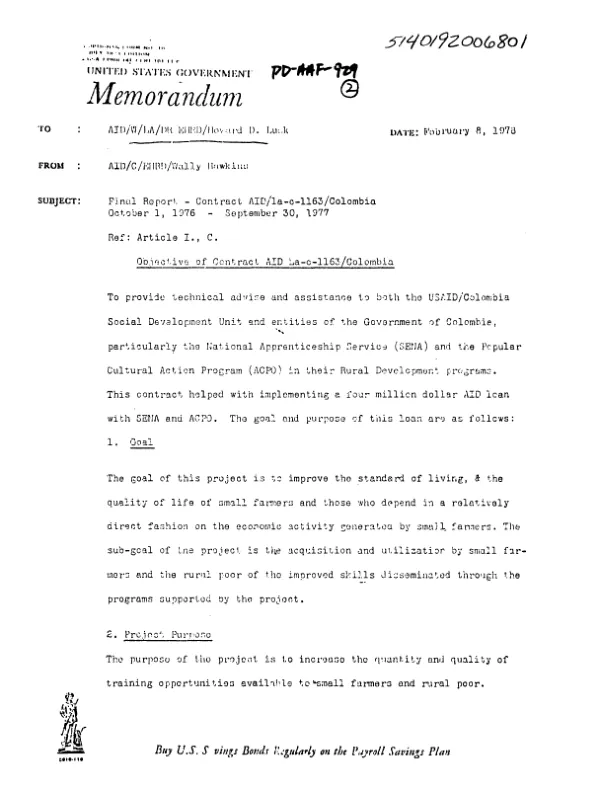
FINAL REPORT - CONTRACT AID/LAC-1163/Colombia
Evaluates project to assist the Government of Colombia's National Apprenticeship Service (SENA) and Popular Cultural Action Program (ACPO) to improve training opportunities for small farmers and the rural poor.
HAWKINS, WALLY · 1978
Sign in to readA free account is required to download.
Abstract
Evaluation covers the period 10/1/76-9/30/77. No methodology is specified. The project progressed as planned. SENA was decentralized, giving more power to the individual regions. The regions conducted their first studies of problems and priorities. SENA established departments to review and improve course effectiveness and to collect and disseminate appropriate technology for use in updating courses. Almost 200 instructors were retrained in special farm management courses. A film library was established, as were agricultural centers specializing in rice, coffee, milk, sheep, and cotton production. SENA's evaluation system was revised to monitor post-graduation job performance and income, and feedback data. SENA allocated equal resources to agriculture, commerce, and industry and extended its training service to cover all parts of Colombia. The main problem SENA faced was high level personnel changes that delayed project implementation changes. Further work is needed in reviewing and improving courses and in assuring that the agricultural centers back up rural mobile programs. Because ACPO was spending more than it was taking in, the loan was renegotiated to buy equipment to generate new income. Continued assistance will be needed in this area until the machinery is in place and producing. The farm laboratories are now better organized. Profit and loss records are kept, and a closer relationship between classroom teaching and farm operations has been established. Revision of ACPO's curriculum has begun. Follow-ups of farm operations and course revisions are necessary, however. ACPO's progress has been slowed by: 1) the concentration of administration in one person; 2) delays in building construction; 3) non-arrival of equipment, impeding rises in net income needed to fund social programs; and 4) delay in the evaluation of ACPO, causing a lack of sound data on which to base recommendations for change.