USAID DEC
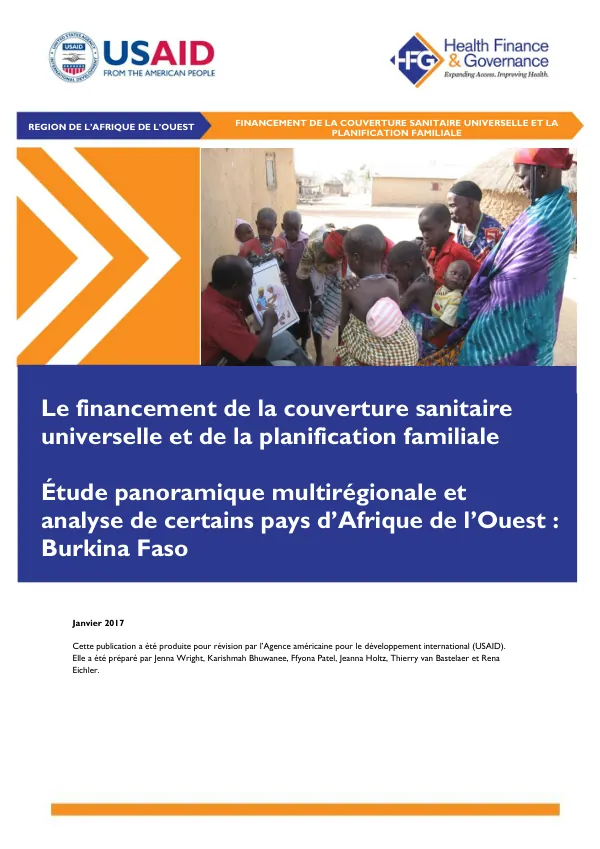
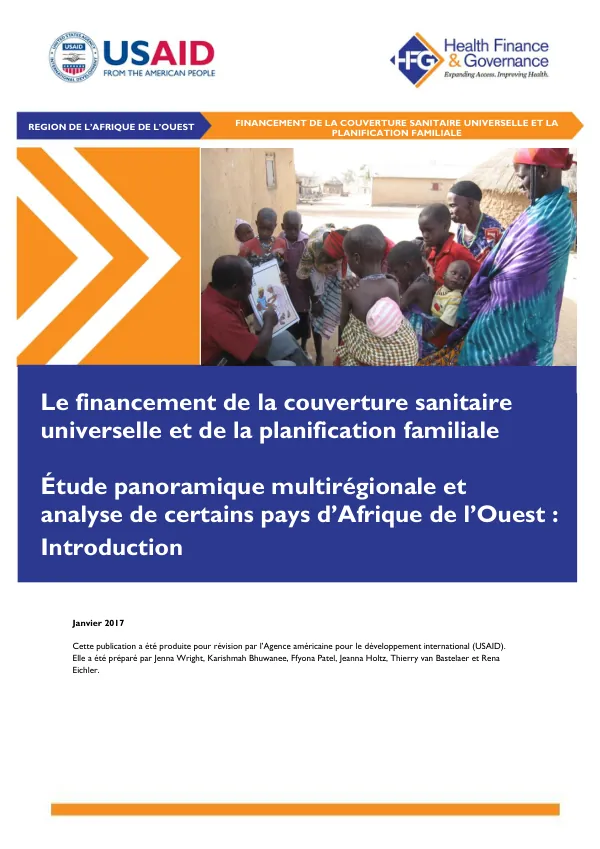
Financing of Universal Health Coverage and Family Planning: A Multi-Regional Landscape Study and Detailed Analysis of Select West African Countries
Sign inABT ASSOCIATES
Financing of Universal Health Coverage and Family Planning: A Multi-Regional Landscape Study and Detailed Analysis of Select West African Countries
The Health Finance and Governance Project (HFG) of the United States Agency for International Development (USAID) aims to improve health outcomes in developing countries by increasing access to healthcare services.
2016 · 78 pages
Sign in to readA free account is required to download.
Abstract
The project, led by Abt Associates, collaborates with partner countries to strengthen their health systems, manage resources more efficiently, and make informed purchasing decisions. HFG is a five-year, $209 million global project that seeks to increase the use of primary and priority health services, including HIV/AIDS, tuberculosis, malaria, and reproductive health services. The project focuses on three key areas: health financing, governance, and service delivery. In the context of West Africa, HFG supports countries in navigating economic transitions necessary to achieve universal health coverage. The project's approach is based on a comprehensive analysis of the health financing landscape in the region, including the role of the private sector in financing health services. A multi-regional landscape study and detailed analysis of select West African countries were conducted to identify key challenges and opportunities in achieving universal health coverage and increasing access to family planning services. The study found that many countries in the region face significant challenges in financing health services, including limited government revenue, inadequate health insurance coverage, and a lack of private sector investment in health. The study also identified several strategies that governments can use to increase access to family planning services, including increasing funding for reproductive health programs, improving the quality of family planning services, and increasing access to family planning information and education. In addition, the study found that the private sector can play a critical role in financing health services, particularly in countries with limited government revenue. The project's findings and recommendations are based on a comprehensive analysis of the health financing landscape in West Africa, including the role of the private sector in financing health services. The study's results are intended to inform policy and programming decisions at the national and regional levels, and to support the development of more effective and sustainable health financing systems in the region. The study's methodology involved a combination of desk reviews, interviews with key stakeholders, and analysis of secondary data sources. The study's findings are presented in a series of tables and figures, which provide a detailed overview of the health financing landscape in West Africa. The study's key findings include: * Many countries in the region face significant challenges in financing health services, including limited government revenue, inadequate health insurance coverage, and a lack of private sector investment in health. * The private sector can play a critical role in financing health services, particularly in countries with limited government revenue. * Increasing funding for reproductive health programs, improving the quality of family planning services, and increasing access to family planning information and education are key strategies for increasing access to family planning services. * The study's results are intended to inform policy and programming decisions at the national and regional levels, and to support the development of more effective and sustainable health financing systems in the region.
Related documents
Documents in this collection
 2016
2016USAID DEC
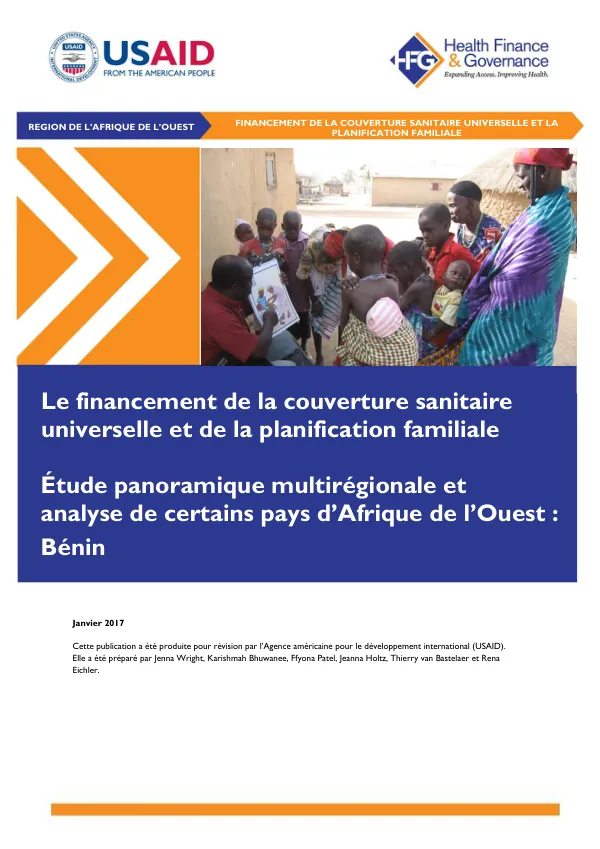
Financing of Universal Health Coverage and Family Planning: A Multi-Regional Landscape Study and Detailed Analysis of Select West African Countries
Open record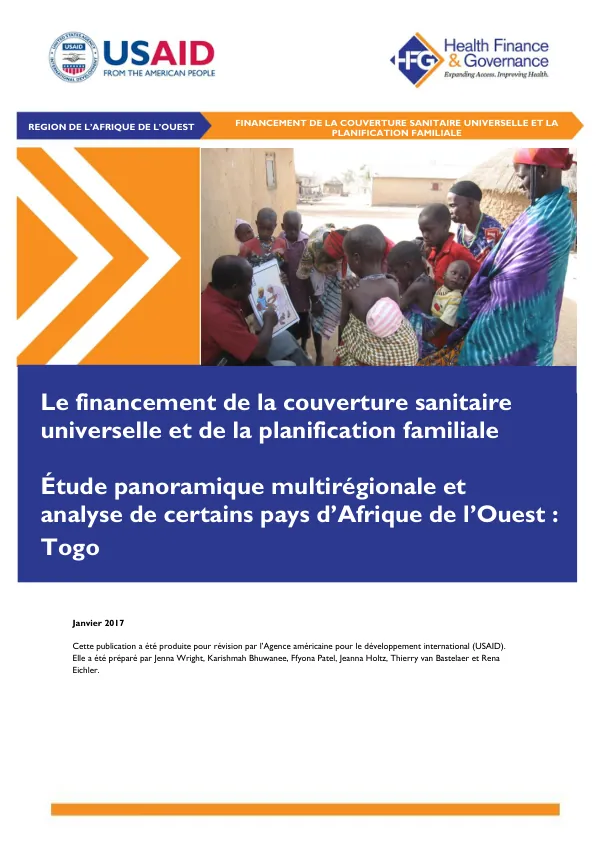 2016
2016USAID DEC