USAID DEC
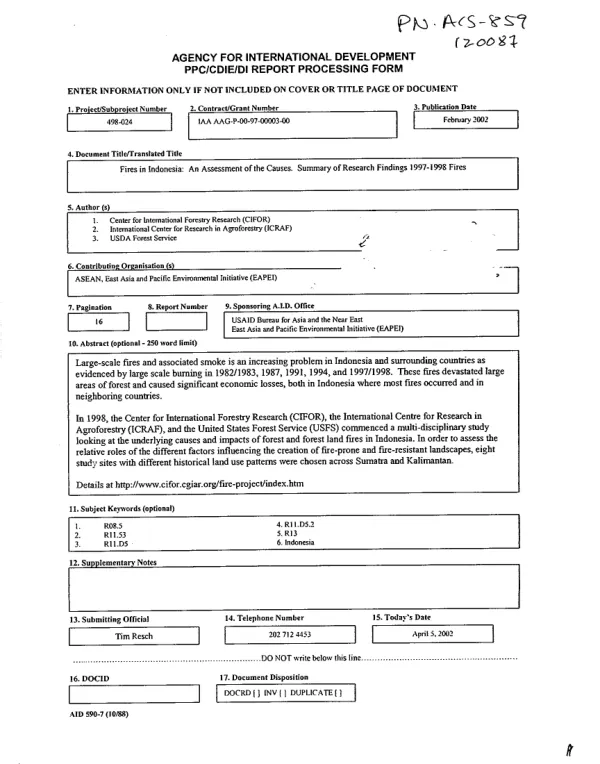
Fires in Indonesia : an assessment of the causes -- summary of research findings : 1997-1998 fires
Sign inCENTER FOR INTERNATIONAL FORESTRY RESEARCH (CIFOR)
Fires in Indonesia : an assessment of the causes -- summary of research findings : 1997-1998 fires
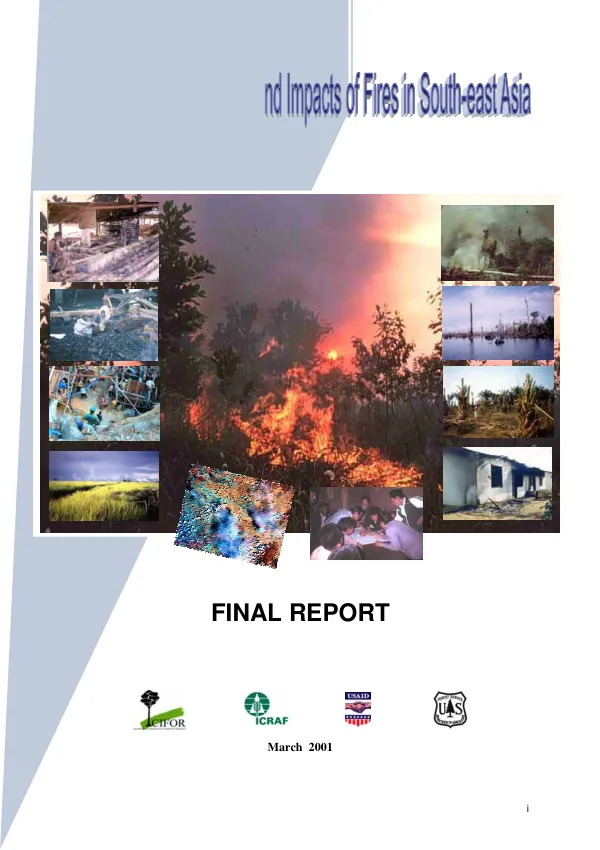
Large-scale fires and associated smoke is an increasing problem in Indonesia and surrounding countries as evidenced by large scale burning in 1982/1983, 1987, 1991, 1994, and 1997/1998.
2002
Sign in to readA free account is required to download.
Abstract
These fires devastated large areas of forest and caused significant economic losses, both in Indonesia, where most fires occurred, and in neighboring countries. In 1998, the Center for International Forestry Research (CIFOR), the International Centre for Research in Agroforestry (ICRAF), and the U.S. Forest Service (USFS) commenced a multi-disciplinary study of the underlying causes and impacts of forest and forest land fires in Indonesia. In order to assess the relative roles of the different factors influencing the creation of fire-prone and fire-resistant landscapes, eight study sites with different historical land use patterns were chosen across Sumatra and Kalimantan. The study identified four direct causes of Indonesia"s fires: (1) use of fire as land-clearing tool; (2) accidents; (3) use of fire as a weapon in resolving land conflicts; and (4) the use of fire as means to improve access to forest resources. The study also identified six underlying causes: (1) confusion over land tenure; (2) inappropriate land use allocation; (3) perverse economic incentives to developers; (4) poor forestry practices; (5) shifting populations; and (6) inadequate fire-suppression infrastructure. Includes recommendations.
Related documents
Documents in this collection
 2000
2000USAID DEC
The underlying causes and impacts of fires in South-east Asia : site 1. Sekincau, Lampung Province, Indonesia -- site report
Open record 2000
2000USAID DEC