USAID DEC
First principles : designing effective education programs using information and communication technology (ICT) : compendium
Sign inAMERICAN INSTITUTES FOR RESEARCH (AIR)
First principles : designing effective education programs using information and communication technology (ICT) : compendium
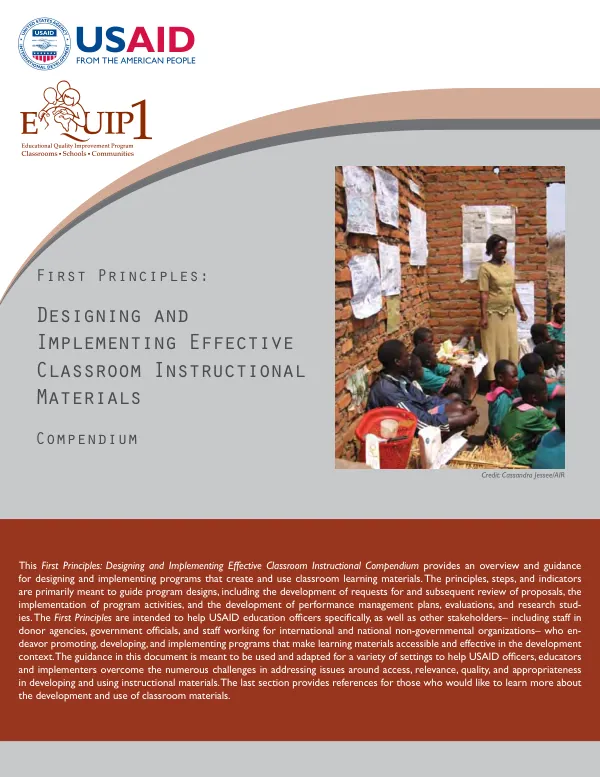
This First Principles compendium provides important overview guidance for designing and implementing education programs that use technology.
2011
Sign in to readA free account is required to download.
Abstract
The principles and indicators are primarily meant to guide program designs, including the development of requests for and subsequent review of proposals, the implementation of program activities, and the development of performance management plans, evaluations, and research studies. The First Principles are intended to help USAID education officers specifically, as well as other stakeholders—including staff in donor agencies, government officials, and staff working for international and national non-governmental organizations—take advantage of good practices and lessons learned to improve projects that involve the use of education technology. The guidance in this document is meant to be used and adapted for a variety of settings to help USAID officers and others grapple with the multiple dimensions of ICT in education and overcome the numerous challenges in applying ICT in the developing-country contexts. The last section provides references for those who would like to learn more about issues and methods for supporting the education of the underserved. This document is based on extensive experience in, and investigation of, current approaches to technology in education and draws on research literature, interviews with USAID field personnel, and project documentation. It also includes profiles of projects funded by USAID and others. This Compendium provides greater depth for those who are interested in knowing more on this topic. A shorter companion piece called a Digest provides a brief overview of key considerations in the planning and implementation of education technology projects. (Excerpt, modified)