COASTAL RESOURCES CENTER OF THE UNIVERSITY OF RHODE ISLAND
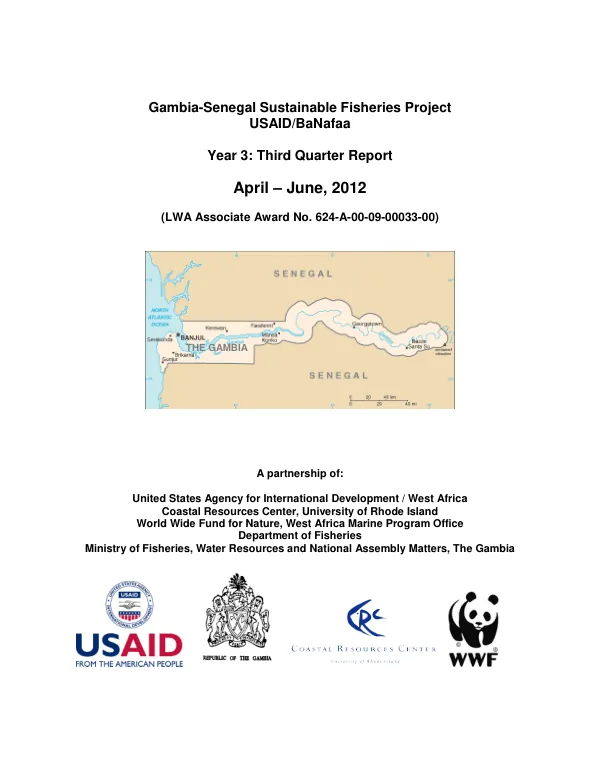
Gambia-Senegal Sustainable Fisheries Project Year 3: Third Quarter Report
The Gambia-Senegal Sustainable Fisheries Project is a five-year regional initiative supported by the American people through the U.S.
2012 · 55 pages
Sign in to readA free account is required to download.
Abstract
Agency for International Development (USAID)/West Africa Regional Mission. The project is implemented through the University of Rhode Island (URI)-USAID cooperative agreement on Sustainable Coastal Communities and Ecosystems (SUCCESS). The World Wide Fund West Africa Marine EcoRegional Program is a regional implementing partner. The project focuses on sustainable fisheries management, including shared marine and coastal resources between The Gambia and Senegal. Field activities are primarily conducted in The Gambia. The project contributes directly to the achievement of the USAID West Africa Regional Office's Environment & Climate Change Response (ROECCR) Results Framework through contributions to multiple Intermediate Results. In West Africa, an estimated 1.5 million tons of fish are harvested annually from the region's waters, with a gross retail value of US$1.5 billion. Artisanal fisheries in The Gambia and Senegal make up a majority of the fisheries landings and contribute significantly to income generation and local food security for coastal communities. Some 200,000 people in The Gambia and 600,000 in Senegal are directly or indirectly employed in the fishing sector. Seafood products are a leading export of the region and generate as much as 20% of the gross value of exports. Fish provides the main source of animal protein for the average rural family in the sub-region, where annual fish consumption can be as much as 25kg per capita. In many rural areas, fishing serves as a "social safety net" when farming turns unproductive due to depleted soil, drought, disease, or other factors. A well-managed sector can benefit other aspects of the region's economy and quality-of-life, including a growing tourism sector and globally and regionally significant parks and natural heritage areas. In Quarter 3 of Year 3 (April 1 – June 30, 2012), progress was made on several activities contributing to Intermediate Results. Effective sole fishery co-management plans and support for MSC certification readiness were implemented, with a focus on improving fisheries management and promoting sustainable fishing practices. Oyster and cockle co-management plans were also developed, with a focus on improving the management of these fisheries and promoting sustainable fishing practices. Human resources training and regional meetings and exchange visits were conducted, with a focus on building the capacity of fisheries stakeholders and promoting collaboration and coordination among them. An assessment of the cross-border trade in sole was also conducted, with a focus on understanding the dynamics of this trade and identifying opportunities for improvement. A bilateral climate change vulnerability assessment was conducted by WWF in Year 3, with a focus on understanding the impacts of climate change on fisheries and identifying opportunities for adaptation and mitigation. The assessment highlighted the need for climate-resilient fisheries management and the importance of promoting sustainable fishing practices. The project management team worked closely with local implementing partners, including TRY, NASCOM, TAGFC, and the Water Resources Laboratory, to implement project activities. The team also worked closely with the Department of Fisheries (DoFish) and stakeholders in the fisheries sector in The Gambia and Senegal to promote sustainable fisheries management and promote the interests of local communities. The project's estimated financial status is currently being reviewed, with a focus on ensuring that project activities are aligned with the project's budget and that resources are being used efficiently and effectively. The project's Results Framework and Life-of-Project (LOP) Targets are also being reviewed, with a focus on ensuring that project activities are contributing to the achievement of the project's Intermediate Results and that the project is on track to meet its overall goals and objectives.