USAID DEC
Gender and Feed the Future
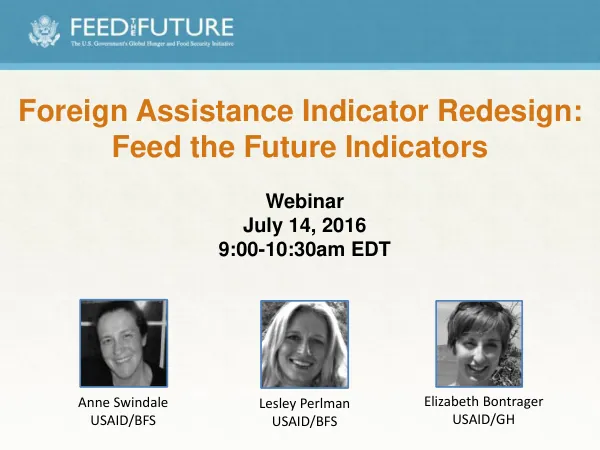
The Foreign Assistance Indicator Redesign, specifically for Feed the Future indicators, was guided by policy development, strategic planning, and external reporting.
2016 · 35 pages
Sign in to readA free account is required to download.
Abstract
This process aimed to improve data quality by making all standard indicators Required-as-Applicable (RAA). Additionally, the redesign introduced flexibility in indicator use, allowing for annual, milestone, and multi-year indicators, as well as custom indicators. The redesign was a collaborative effort between USAID and State, with the goal of updating all standard foreign assistance indicators for reporting into the Performance Plan Report (PPR). New Standard Program Development (SPSD) categories were established for Feed the Future indicators, which fall under EG.3 for Agriculture and HL.9 for Nutrition. As a result of the redesign, the total number of indicators was reduced. Feed the Future indicators cover areas and elements such as nutrition, nutrition-sensitive agriculture, and agriculture. These indicators are categorized as Required (R), Required-as-Applicable (RAA), and Optional (O). The indicators are reported in the Feed the Future Management System (FTFMS) and the PPR, with some indicators being reported by Implementing Partners (IPs) and others by Operating Units (OUs). The FTFMS is used to report mechanism-level indicators, which are reported by IPs and OUs. These indicators are Required-as-Applicable and will be assigned to OUs based on programming. OUs can opt out of reporting these indicators by providing a written justification. Three cross-linked mechanism-level indicators that are linked to other SPSD categories or program areas are considered Optional (O). New indicators were introduced for FY 2017, including EG.3-1, which measures the number of households benefiting directly from USG assistance under Feed the Future. This indicator combines two previous indicators and is now Required-as-Applicable, allowing for an accurate count of household reach. However, potential issues with double counting households were identified, and households with multiple beneficiaries should be counted only once. Disaggregations for this indicator include duration (new, continuing) and location (rural, urban/peri-urban).
Related documents