ROBERT R. NATHAN ASSOCIATES, INC.
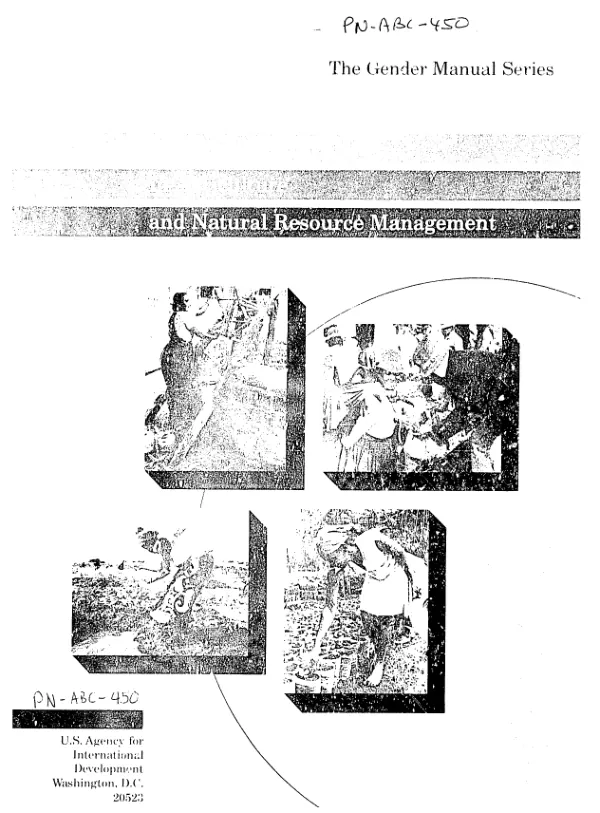
Gender issues in agriculture and natural resource management
Women comprise the majority of the world"s food producers and are involved in every type of agricultural activity.
Russo, Sandra; Bremer-Fox, Jennifer · 1989
Sign in to readA free account is required to download.
Abstract
Yet despite their crucial contributions, women in developing countries have largely been denied access to the resources necessary for agricultural development (i.e., land, capital, credit, technology, and training). This manual provides methods, guidelines, and examples for integrating women into agriculture and natural resource development projects. Through extensive use of lists and question sheets, the report identifies gender issues that should be addressed by: (1) A.I.D. programs, projects, and nonproject assistance; (2) social, economic, and technical analyses carried out during the project design stage; (3) individual project components (e.g., agricultural education and training, credit, extension, management development, and storage and processing); and (4) project implementation and monitoring systems. The manual also presents case studies describing efforts to incorporate women or gender analysis in the following areas: agribusiness in Guatemala, rice-based farming in the Philippines, dairy goat production in Kenya, agricultural research in Ecuador, bean variety testing in Colombia, and bench terracing and water conservation in Kenya. According to the report, until women are appropriately targeted by development activities, Third World food crop production may be destined to remain at current stagnant levels.
Related documents