USAID DEC
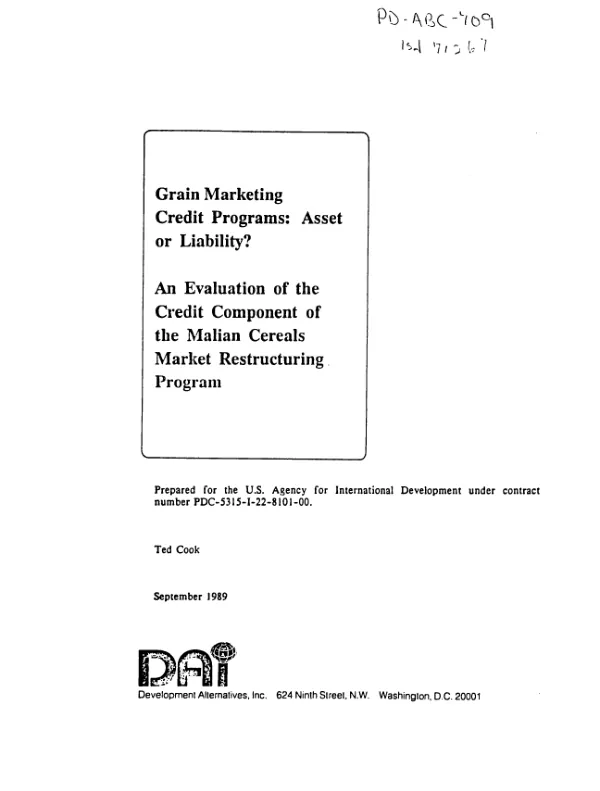
Grain marketing credit programs : asset or liability? -- an evaluation of the credit component of the Malian cereals market restructuring program
Sign inDEVELOPMENT ALTERNATIVES, INC. (DAI)
Grain marketing credit programs : asset or liability? -- an evaluation of the credit component of the Malian cereals market restructuring program
Interim evaluation of a program component to provide credit to Malian private traders and village cooperatives for grain purchase and storage.
Cook, Ted · 1989
Sign in to readA free account is required to download.
Abstract
The evaluation covers the period through 1989. As the result of the credit program, more traders have stored more grain, for longer periods, than would have happened without the loan money. However, the final consequences of this massive storage are not yet known. The component falsely assumed that seasonal grain shortages would cause consumer grain prices to rise enough, within the year, to cover added storage costs. Since the drought years, however, this has not always been the case, making long-term grain storage extremely risky and unwise for private traders. The component also aimed to raise producer prices by generating competition between traders who had received loans for storage and those who were buying grain for retail sale. The credit program did have this effect, but the extra demand may have been too high, since it made the original purchase grain price so high that the traders could not sell it back to the market without losing money. Thus, hundreds of traders are holding grain in store, waiting to see if it will turn into a profit or a loss. Judging the proper level of liquidity is especially difficult in the closed Malian market. An export program would allow more flexibility into the equation because it would provide an additional outlet for a surplus crop, protecting local price integrity. The program faces a serious dilemma. If the current program loans are nearly all renewed for one year, few funds will be available for new loans in 1990. On the other hand, if the loans are not renewed, this would force traders to take losses by selling off their grain, and few would apply for loans next year. There are no signs that loan recipients perceive the loans to be a government handout that would not need to be repaid. Banks appear to consider the loans to be non-recourse loans, which would allow the bank to seize the borrower's collateral but take no further action.
Related documents