PANOS INSTITUTE
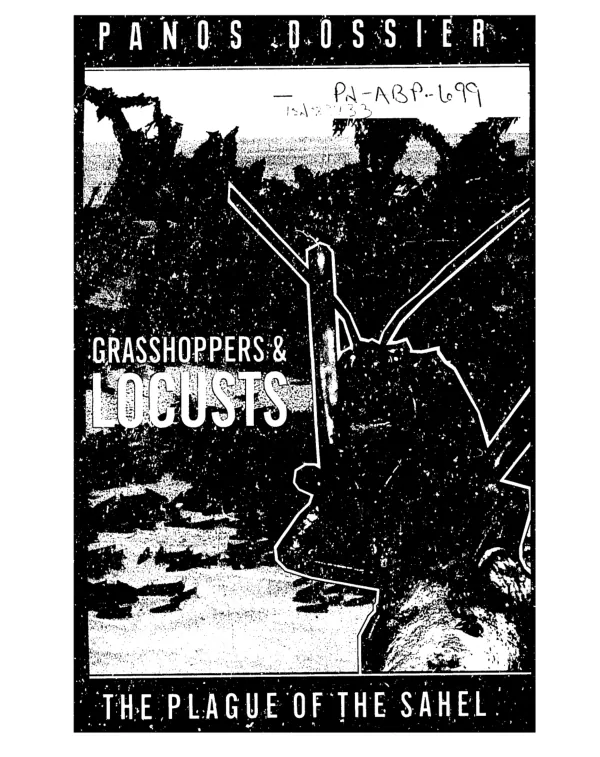
Grasshoppers and locusts : the plague of the Sahel
In 1988, after a long period of apparent quiescence, swarms of Desert Locusts swept across the Sahel and nearby areas, covering at one point 43 countries, or one-fifth of the earth"s surface.
1970
Sign in to readA free account is required to download.
Abstract
While the dramatic nature of locust plagues generally prompts massive emergency measures, unfortunately these are usually not followed by equally large scale efforts to prevent future plagues. This monograph addresses means of preventing locust plagues, as well as approaches to mitigating damage from the Sahel"s other major crop pest, grasshoppers (which are just as damaging as locusts, but less amenable to prevention). Chapters one through three offer an overview of past approaches to pest control (using the flawed handling of the 1986-88 plague as an example); the nature of Sahelian farming systems; and the breeding behaviors and destructive patterns of grasshoppers and locusts. Chapters four through seven review other issues related to pest control, including data collection and communication techniques (the use of satellites to detect breeding grounds and short-wave radio to quickly disseminate information hold the greatest potential); use of chemical pesticides; and coordination (or lack thereof) among regional, national, and donor organizations, and NGOs. A final chapter stresses the need for consistent funding of prevention efforts, a search for long-term solutions, and improved institutional coordination; it suggests that a combination of control methods (e.g., chemical and biological pesticides, use of village brigades) is best. Numerous references.