USAID DEC
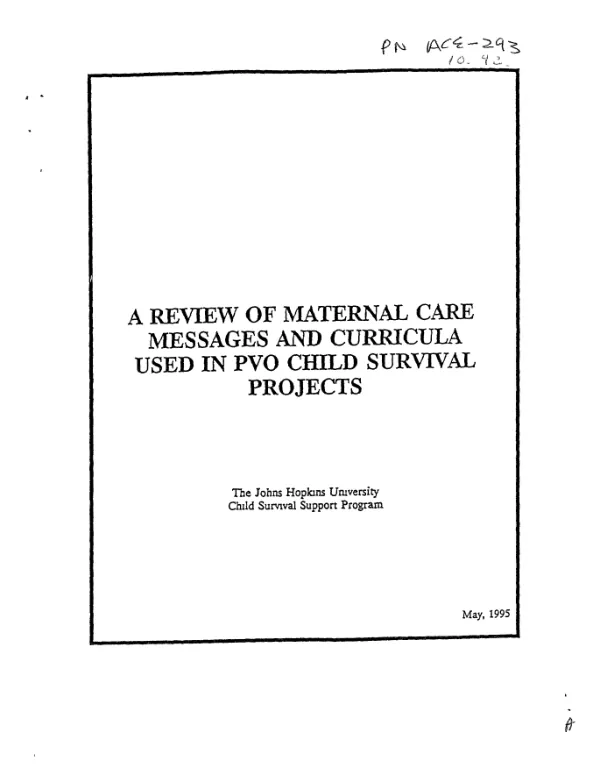
Guide for including HIV/AIDS prevention in PVO child survival projects : recommendations for child survival managers
Sign inJOHNS HOPKINS UNIVERSITY. SCHOOL OF HYGIENE AND PUBLIC HEALTH. DEPT. OF INTERNATIONAL HEALTH
Guide for including HIV/AIDS prevention in PVO child survival projects : recommendations for child survival managers
This report provides practical guidance to PVOs wishing to include HIV/AIDS prevention activities in their child survival (CS) projects.
Mercer, Mary Anne, ed.; Munz, Monique, ed. · 1995
Sign in to readA free account is required to download.
Abstract
The guidelines respond to four questions raised by PVOs in this context: How are HIV/AIDS and CS interventions similar and how are they different? How should we decide whether or not to include an intervention for HIV/AIDS prevention in our CS project? How should we decide the basic strategies and the community groups to include in an HIV/AIDS prevention intervention? What indicators provide the most useful measures of the success of HIV/AIDS prevention activities? The report concludes that while CS provides a suitable framework for HIV/AIDS interventions the important differences between the two require a careful rethinking of types of staff, training, beneficiary groups, and community interactions. The initial decision to include an HIV/AIDS intervention should be based on the PVO"s existing relationship with the community, the community"s priorities, epidemiologically defined need in the project area, and a number of other factors. The choice of the precise approach will depend on additional factors, such as the resources available, the accessibility and key needs of community groups, the feasibility and likely success of various approaches, and the ways in which the HIV/AIDS intervention will relate to the other CS activities. In sum, there are no formulae for incorporating HIV prevention activities into a CS project. The key success factor seems to lie in the community itself. Only with a clear understanding of the beliefs, attitudes, and understanding of the project population regarding sexual matters, including sexually transmitted diseases and the social meaning of sex and procreation, are project staff likely to be able to develop meaningful strategies to help the community protect itself against HIV infection.