ROBERT R. NATHAN ASSOCIATES, INC.
Guyana"s foodcrop systems, an analysis for development planning
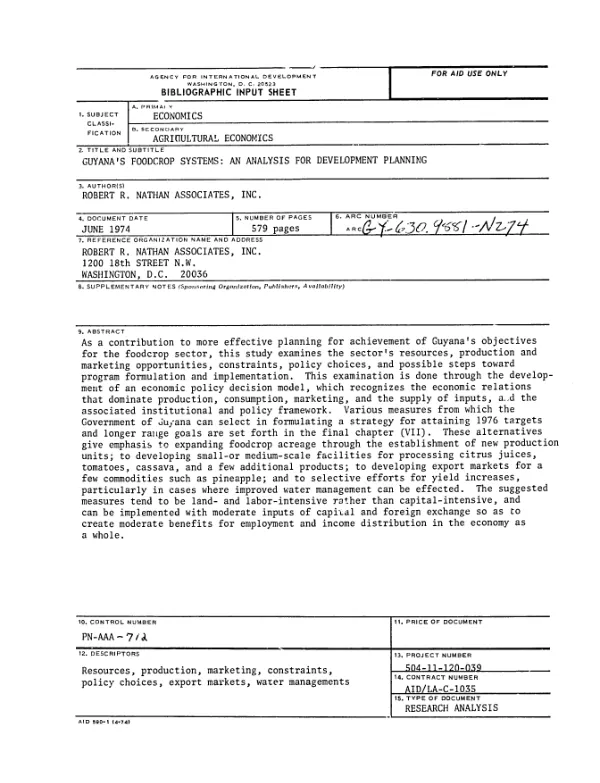
As a contribution to more effective planning for achievement of Guyana"s objectives for the foodcrop sector, this study examines the sector"s resources, production and marketing opportunities, constraints, policy choices, and possible steps toward program formulation and implementation.
1970
Sign in to readA free account is required to download.
Abstract
This examination is done through the development of an economic policy decision model, which recognizes the economic relations that dominate production, consumption, marketing, and the supply of inputs, and the associated institutional and policy framework. Various measures from which the Government of Guyana can select in formulating a strategy for attaining 1976 targets and longer range goals are set forth in the final chapter (VII). These alternatives give emphasis to expanding foodcrop acreage through the establishment of new production units; to developing small- or medium-scale facilities for processing citrus juices, tomatoes, cassava, and a few additional products; to developing export markets for a few commodities such as pineapple; and to selective efforts for yield increases, particularly in cases where improved water management can be effected. The suggested measures tend to be land- and labor-intensive rather than capital-intensive, and can be implemented with moderate inputs of capital and foreign exchange so as to create moderate benefits for employment and income distribution in the economy as a whole.
Connected topics