USAID. MISSION TO BANGLADESH
Health/nutrition surveillance for disaster preparedness
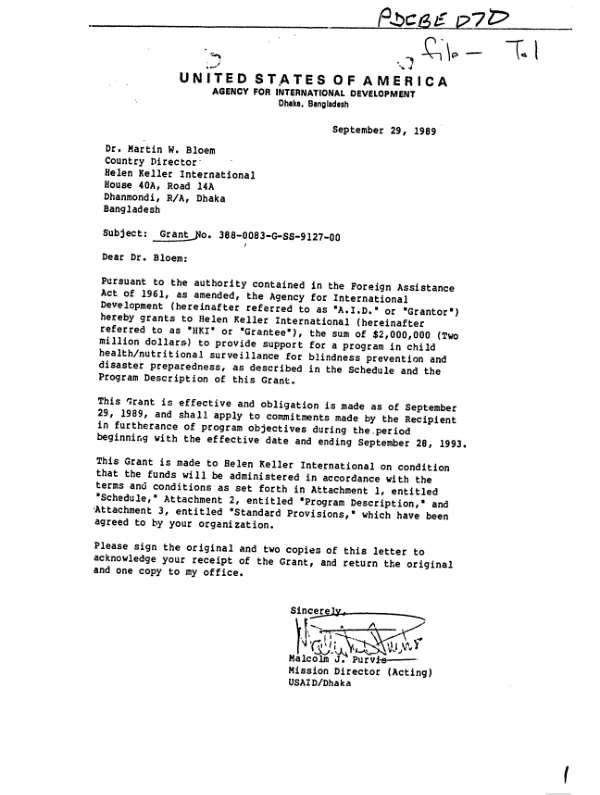
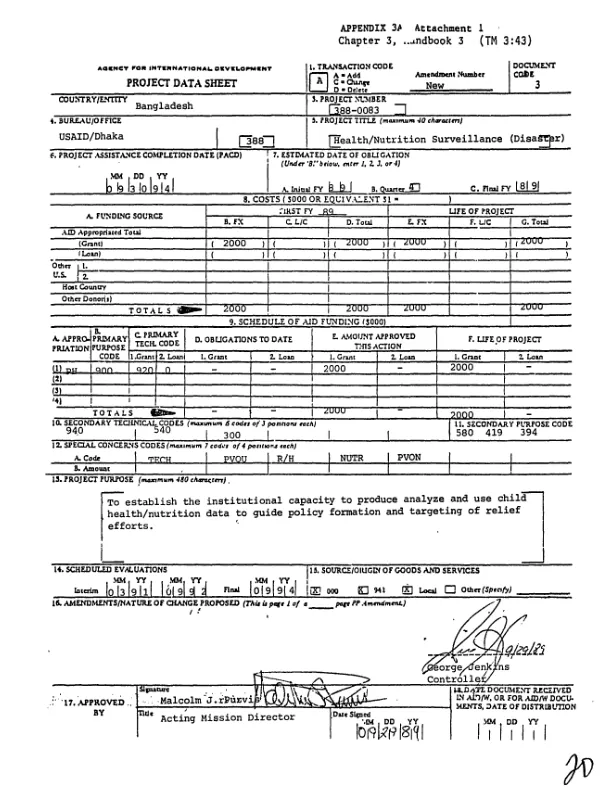
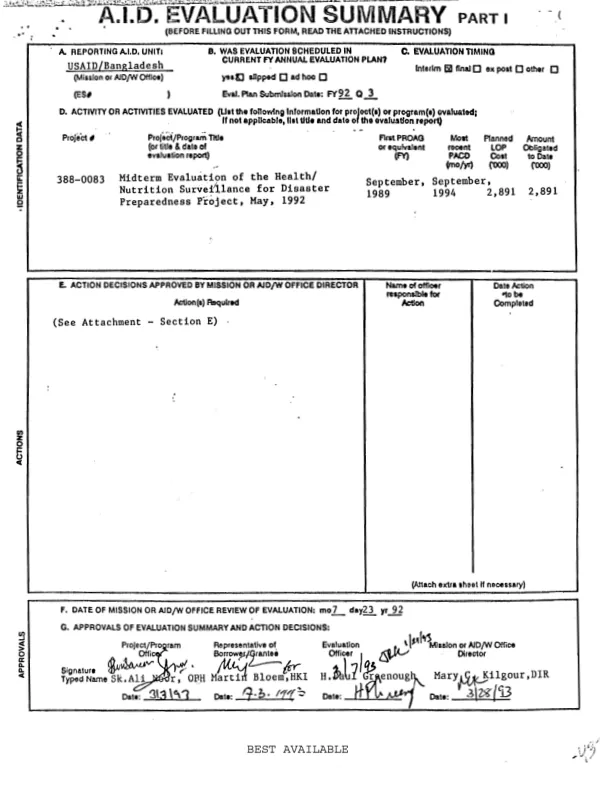
Summarizes interim evaluation (XD-ABF-784-A) of a grant to Helen Keller International (HKI) to establish a child nutrition/health surveillance system in flood-prone areas of Bangladesh.
1993
Sign in to readA free account is required to download.
Abstract
The evaluation covered the period 10/89-6/92. This complex project is achieving its objectives, and has become a highly credible source of information on the nutritional status and socioeconomic characteristics of communities vulnerable to disaster. More than 30 reports on the prevalence of malnutrition and nutritional blindness of children aged 4-59 months, based on data collected by ten NGOs, have been disseminated widely and on schedule. Project reports now serve as the primary data source for donor agencies in prioritizing action and allocating resources in high risk areas and in response to disasters. In addition, the project has demonstrated flexibility by extending its system to include emergency monitoring of areas affected by a 1991 cyclone and by an influx of refugees from Burma. These are notable accomplishments in light of disruptions due to the Gulf War and local political unrest. The high quality of the data collected is a direct result of HKI"s efforts at standardization, repeated training, and supervision of data collection. HKI also deserves credit for conceiving and implementing the plan to use NGOs for data collection, thus greatly enhancing data collection quality and facilitating rapid use of information. For their part, the NGOs have exhibited much cooperation and dedication to the project efforts. Other countries may wish to consider using NGOs as partners in sustainable surveillance activities. The evaluators recommended that HKI expand data collection to make surveillance representative of the whole country. However, this recommendation was rejected by the Mission on the grounds that its implementation would exceed the length of the grant. The following lessons were learned. (1) Continued standardization exercises are critical to maintain data quality and ensure credible measurements. (2) Data processing and analysis operations need to allow rapid reporting and dissemination while remaining flexible enough to accommodate subsequent analyses. (3) The process of transferring ownership of the project to the Bangladeshi Institute of Public Health and Nutrition (IPHN) should be speeded up. (4) Because of the broad applicability of project data, a series of reports tailored to the interests and needs of a variety of potential users should be initiated.
Related documents
Documents in this collection
 1992
1992USAID DEC
Nutritional surveillance project for disaster preparedness and prevention of nutritional blindness : mid-term external evaluation
Open record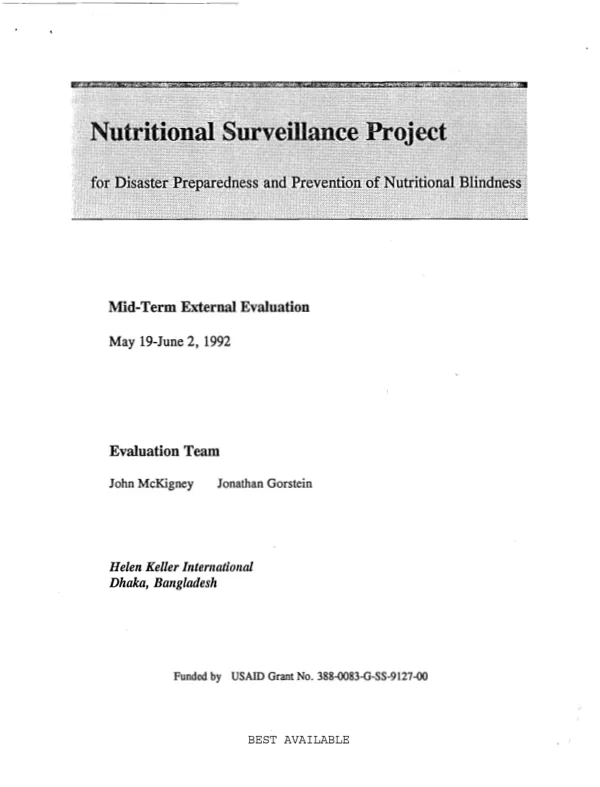 1992
1992USAID DEC