AMERICAN INSTITUTES FOR RESEARCH (AIR)
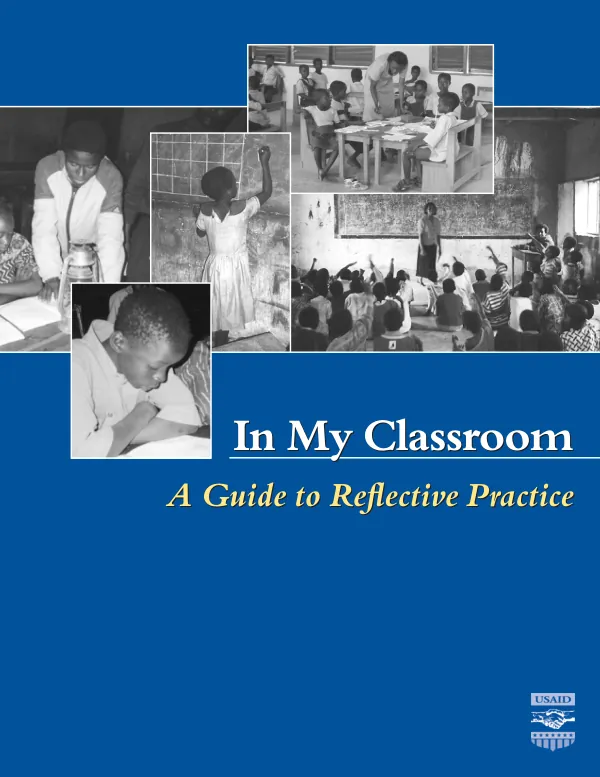
In my classroom : a guide to reflective practice
This manual is designed to help teachers, school administrators, and others who "facilitate" education to think in new ways about teaching, learning, and classroom practice.
Du Plessis, Joy; Habib, Mona · 1970
Sign in to readA free account is required to download.
Abstract
Chapter 1 describes the principles of the manual, while chapter 2 focuses on how to become a good facilitator of learning. Chapters 3 through 7 address specific topics, covering classroom management, teaching and learning materials, continuous assessment, gender issues, and life skills. The manual is based on the following seven principles: (1) the technique of appreciative inquiry, which includes identifying strengths rather than problems, imagining how things might improve, and developing a road map for change; (2) the pedagogical value of adult life and work experiences; (3) use of and reflection on new learning experiences; (4) the importance of understanding the reasons for change; (5) the notion that responsibility for change rests with the individual; (6) the transformative power of dialogue; and (7) constructivism, the view that knowledge is dynamic, can be generated, and is valuable wherever it is located.
Connected topics