DT GLOBAL
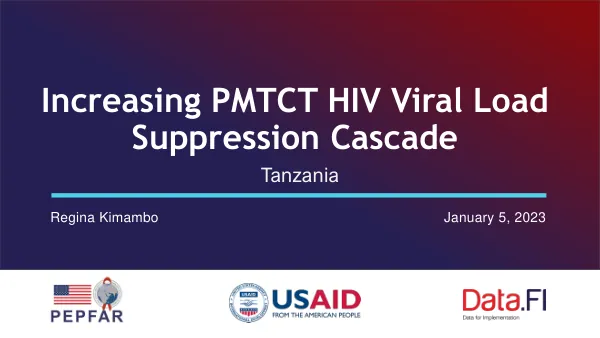
Increasing PMTCT HIV Viral Load Suppression Cascade in Tanzania
The HIV viral load suppression cascade among pregnant and breastfeeding women in Tanzania is a critical public health concern.
2023 · 7 pages
Sign in to readA free account is required to download.
Abstract
In June 2022, data from December 2021 to May 2022 revealed that 8 out of 9 councils had sub-optimal HIV viral load suppression of less than 95 percent, the national target. This indicates a significant gap in achieving the desired outcome. The data showed varying levels of viral load suppression across different councils, with some performing better than others. For instance, Kondoa TC achieved a 100% viral load suppression rate, while Bahi DC and Dodoma CC had rates of 24% and 39%, respectively. Kinondoni MC and Temeke MC had rates of 76% and 81%, respectively, while Dar CC and Mpwapwa DC had rates of 85% and 88%, respectively. Several factors contributed to the low viral load suppression cascade among HIV-positive pregnant and breastfeeding women. These included a knowledge gap on the use of mother-child cohort reporting tools, delayed availability of these tools, data quality issues, and a lack of new mother-child cohort tools in some facilities. This resulted in a delay in documenting HIV-positive pregnant and breastfeeding women's records, missed opportunities for viral load testing, and a subsequent drop in viral load suppression rates. To address these challenges, the Council Health Management Teams (CHMTs) were coached on the use of mother-child cohort registers and reporting forms. Healthcare workers were oriented on how to use these tools, and supported distribution of the registers and reporting forms to health facilities. CHMTs conducted monthly data-driven supportive supervision and quality improvement activities, which included data review, gap identification, and selected facility support. The implemented strategies showed positive outcomes, with six councils improving their viral load suppression rates to between 79% and 94%. However, two councils, Kondoa TC and Kongwa DC, experienced a drop in viral load suppression rates. To address this, tweaking of strategies for these councils is recommended, along with continuous engagement of clinical implementing partners and continuous data-driven supportive supervision visits. The data for implementation is a five-year cooperative agreement funded by the U.S. President's Emergency Plan for AIDS Relief through the U.S. Agency for International Development. The agreement began on April 15, 2019, and is implemented by Palladium in partnership with several local and international organizations. The information provided in this presentation is not official U.S. government information and does not necessarily reflect the views or positions of the U.S. President's Emergency Plan for AIDS Relief, U.S. Agency for International Development, or the United States Government.
Related documents