USAID. MISSION TO DOMINICAN REPUBLIC
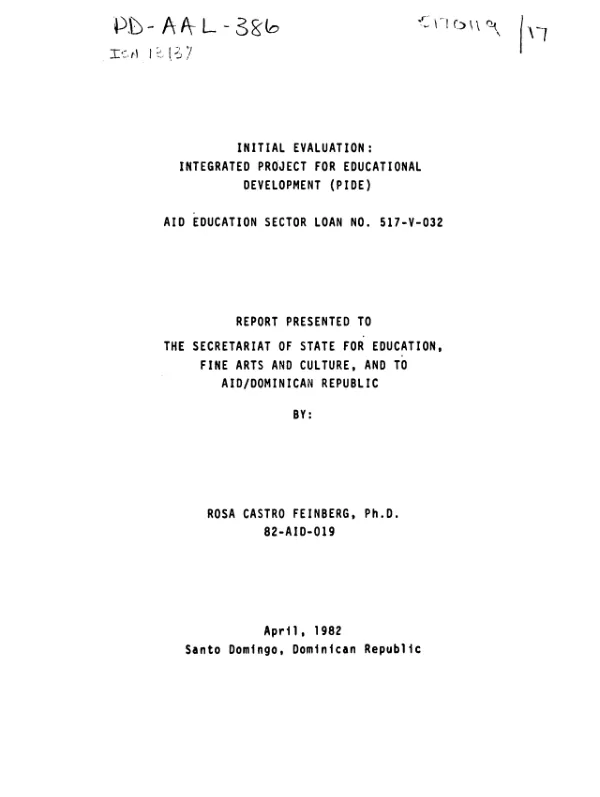
Initial evaluation : integrated project for educational development
Evaluates project to improve primary education in rural areas of the Dominican Republic.
Feinberg, Rosa C. · 1982
Sign in to readA free account is required to download.
Abstract
Special evaluation covers the period through 4/82 and is based on document review, site visits, and interviews with project personnel, teachers, educational administrators, and parents. The project has had mixed success. School construction has been remarkable - 1,055 classrooms have been built. The staff upgrading component has been extremely successful with over 86,000 person-hours of training having been provided to 2,366 teachers; positive results are evident in the classroom. Both in-country and U.S. training have been provided to administrative staff. Additional classroom teachers have been hired, but art and agriculture teachers are still needed. The educational materials component has been equally successful. Basic materials have been developed and distributed to schools, where they are being used extensively; 210 teachers have been trained in materials preparation; and the project materials development team has received valuable on-the-job training. Development of certain more specialized materials is still lacking. Failure to name a permanent Director of Research has impeded activities under this component. Baseline data were never collected and the planned achievement testing system has not yet been established; there have been four independent studies approved. Nor is the project's information component functioning well. A facilities inventory of dubious accuracy has been completed, but planned monitoring surveys have not been conducted and no statistical reports have been published. Four statistics staff members and four research staff members have received U.S. training. Despite the project's notable achievements in staff upgrading and materials development, project goals will not be met due to serious implementation delays during the first 2 years. It is recommended that the project be extended so that these goals can be met and that communications, coordination, and support services (transportation in particular) be improved. Several specific recommendations are made for each project component.
Related documents