INTERNATIONAL CENTER FOR LIVING AQUATIC RESOURCES MANAGEMENT (ICLARM)
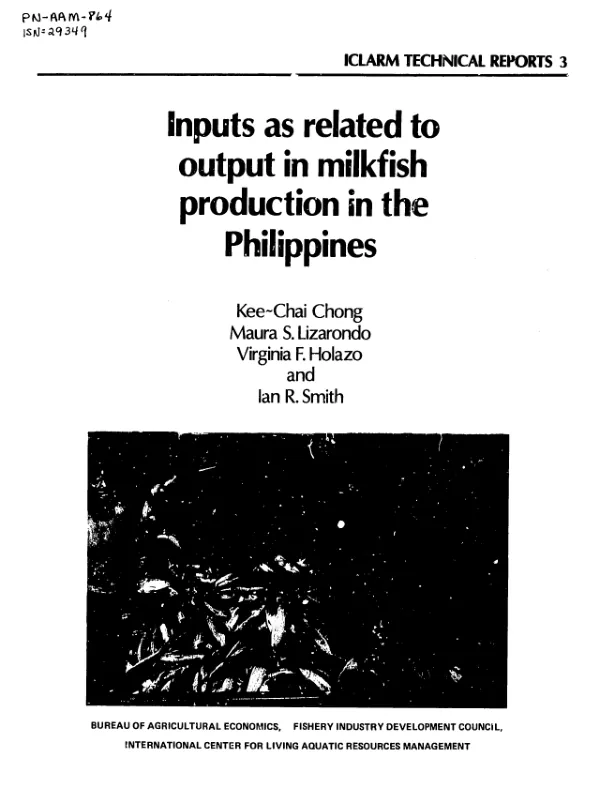
Inputs as related to output in milkfish production in the Philippines
The possibilities for improving the economic efficiency and profitability of milkfish farming in the Philippines by determining optimum input-output relationships are reported in this study, which uses the Cobb-Douglas production model to quantify the relative contributions of 11 supplementary inputs to milkfish output on 324 farms in seven provinces.
Chong, Kee C.|Lizarondo, Maura S. · 1982
Sign in to readA free account is required to download.
Abstract
Results show that inputs significantly related to milkfish output include stocking rates, pond age, operating costs, fertilizers, and farm size. Optimum stocking rates for milkfish frys and fingerlings, and application rates for organic and inorganic fertilizers are calculated. The more efficient farms were found to be those which are larger, privately owned, and located in climatically propitious areas. The authors conclude that a more intense application of inputs, especially in deeper ponds, would yield much higher output and profits. The available economies of scale offer great potential for Philippine milkfish culture. Farmers and policymakers could work to reorganize and restructure small units of production into larger, more efficient, and more profitable units without changing tenure status. A case for group farming is presented and related to the Philippine government's scheme of fishpond estate development. Improvements to existing assistance programs are also discussed. (Author abstract, modified).
Connected topics
Related documents
Documents in this collection
 1970
1970USAID DEC
Milkfish production dualism in the Philippines : a multidisciplinary perspective on continuous low yields and constraints to aquaculture development
Open record 1978
1978USAID DEC