INSTITUTE FOR CONTEMPORARY STUDIES. INTERNATIONAL CENTER FOR ECONOMIC GROWTH
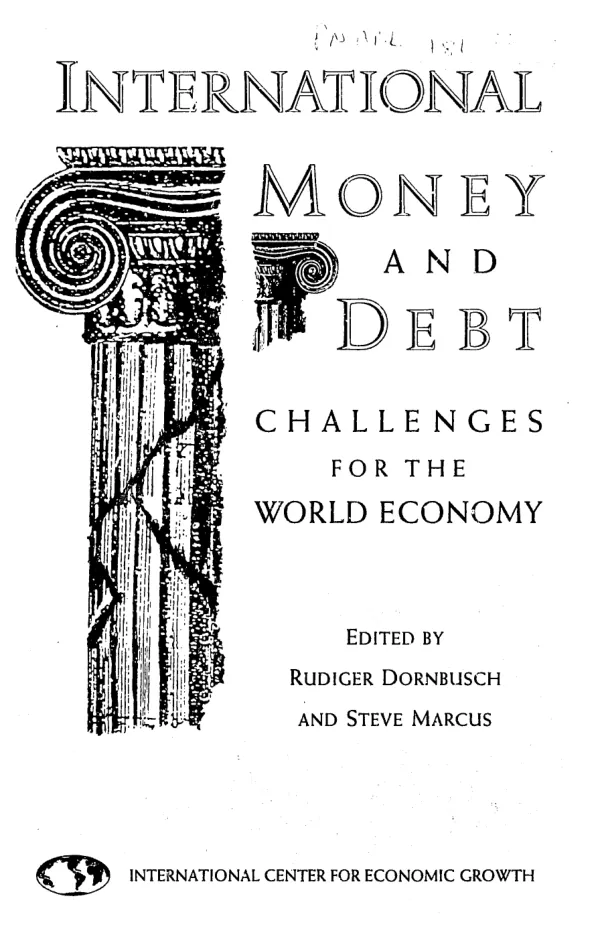
International money and debt : challenges for the world economy
The world economy was challenged during the 1980"s by the burden of debt in the developing countries and by an international monetary system characterized by highly volatile exchange rates.
Dornbusch, Rudiger, ed.; Marcus, Steve, ed. · 1970
Sign in to readA free account is required to download.
Abstract
This book, a compilation of essays by leading economists from around the world, explores the policy responses that emerged during the 1980"s, as well as the possible future course of international debt management. Special emphasis is placed on the Colombian debt problem. The contributors stress the need for international policy coordination and examine the changing role of central banks in the flexible exchange rate system that prevails today. The book concludes that there has been some progress since the Brady Plan, which emphasized market-based debt reduction, was announced in 1989. However, recovery is just beginning, and the crisis is unlikely to end soon. It is considered crucial that developing countries stop the flight of capital, and four steps towards achieving this goal are outlined. In analyzing the international monetary system, the authors state that there is no perfect way of reconciling coordination with the existence of independent nation states. Although an international arrangement is necessary, it will inevitably be incomplete and heavily politicized.
Connected topics
Related documents