UNIVERSITY OF NEBRASKA AT LINCOLN
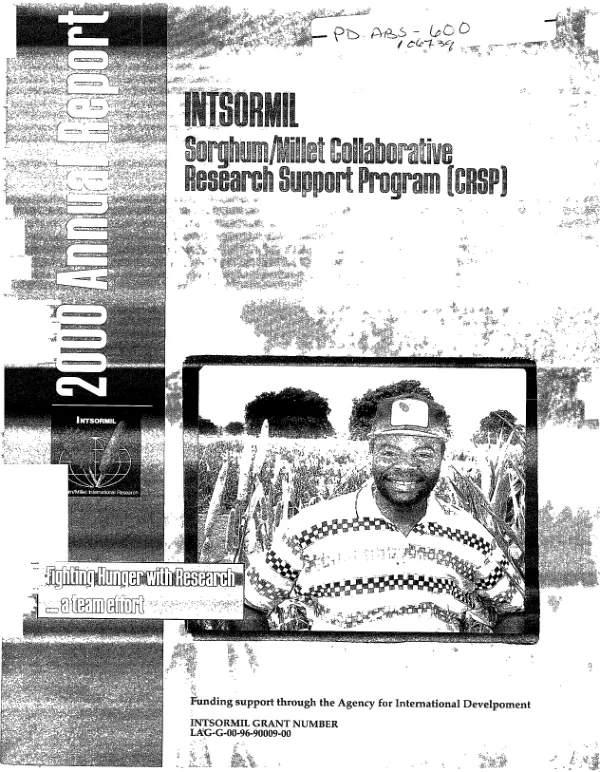
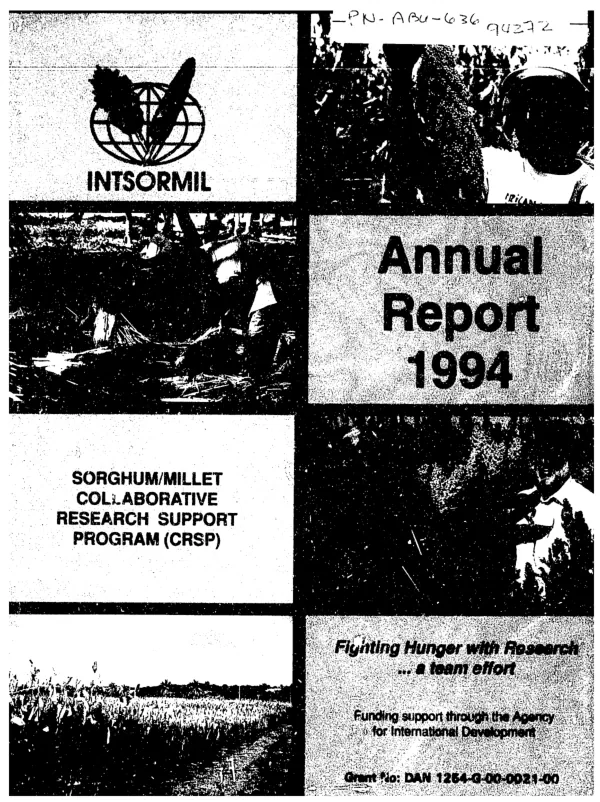
INTSORMIL, 1986-1988 triennial external evaluation panel review (EEP)
External evaluation of a project to promote collaborative research on sorghum and millet.
Sign in to readA free account is required to download.
Abstract
External evaluation covers the period 1986-6/88. Numerous research accomplishments have been achieved in the areas of agronomy/physiology, plant breeding, entomology, food quality and nutrition, biochemistry, and pathology. Work with Striga, a costly weed problem in Africa and Asia, has resulted in two especially noteworthy developments: biochemical results on Striga germination by means of a sorghum root exudate and productive work on resistant strains. The project has also developed a more streamlined approach to social science work that is generating useful information on the relevance of different kinds of sorghum and millet technologies in specific on-farm environments. The project has improved collaborators' enthusiasm, progress, and qualifications by encouraging their involvement in host country planning and priority setting and by providing extensive training. Other accomplishments include a series of productive workshops and such publications as the food quality manual for West Africa. Also, and most importantly, U.S. inputs overseas have been kept at levels that can probably be sustained should A.I.D. be forced to pull out. The project, which is poised to make a major contribution on both the international and domestic scenes, is now capable of initiating increases in sorghum and millet production through applied research at selected prime sites. This strategy is a wise one, especially in the light of the budgetary shortfalls that constitute the project's principal constraint. The project's significant accomplishments should be publicized as part of an effort to help overcome these funding constraints by building broad support for collaborative research projects in scientific, political, academic, and industrial circles. Numerous specific recommendations regarding individual areas of research are included.
![INTSORMIL five-year EEP [external evaluation panel] review : years 12-13-14, 1990-1993 activities](https://covers.devme.ai/gen/7583.webp)