J.D.G. COMMUNICATIONS, INC.
Kabul Municipality Develops an Online Interactive Map of Donor Projects in Kabul
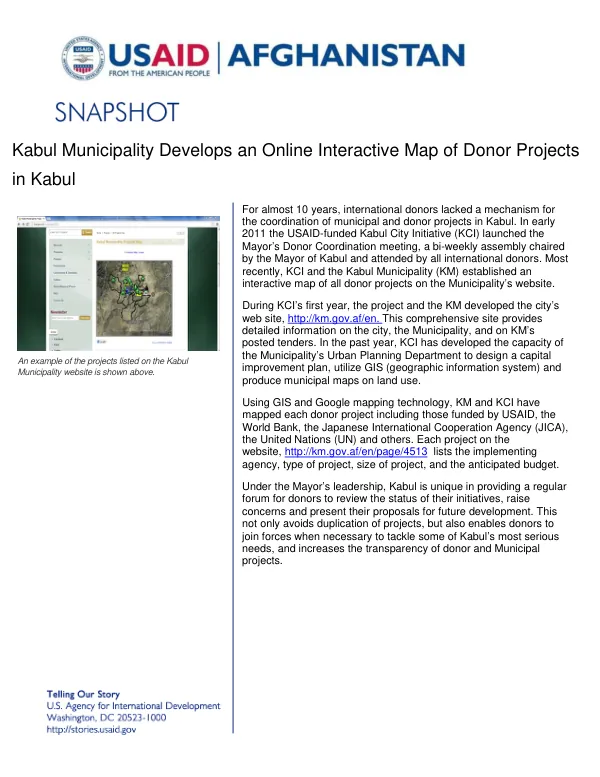
The Kabul Municipality website features an online interactive map of donor projects in Kabul.
2014 · 1 pages
Sign in to readA free account is required to download.
Abstract
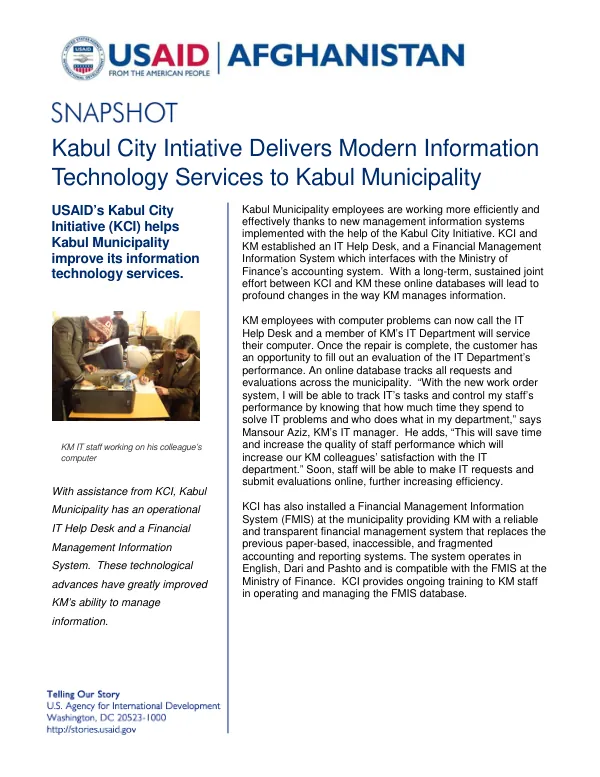
This initiative addresses a decade-long lack of coordination among municipal and donor projects in the city. The USAID-funded Kabul City Initiative (KCI) launched the Mayor's Donor Coordination in 2011, a bi-weekly meeting chaired by the Mayor of Kabul and attended by all donors. The KCI and Kabul Municipality (KM) developed an interactive map of donor projects on the Municipality's website. This comprehensive site, http://km.gov.af/en, provides detailed information on the city, the Municipality, and KM's posted tenders. The website was developed during KCI's first year, and it showcases the city's web presence. The KCI has enhanced the capacity of the Urban Planning Department to create a capital improvement plan, utilize GIS technology, and produce municipal maps on land use. The department's capabilities were improved through training and technical assistance. The Urban Planning Department now uses GIS and mapping technology to map each donor project, including those funded by USAID, the World Bank, JICA, and the United Nations. Each project on the website, http://km.gov.af/en/page/450, lists the implementing agency, project type, project size, and anticipated budget. The Mayor's leadership has facilitated a regular forum for donors to review project status, address concerns, and propose future initiatives. This coordination has reduced project duplication, enabled donors to collaborate on critical needs, and increased transparency of Municipal and donor projects. The online interactive map of donor projects in Kabul has improved coordination and transparency in the city. The Mayor's Donor Coordination has become a unique forum for donors to discuss project status, concerns, and future proposals. This initiative has enhanced the effectiveness of donor projects and increased the Municipality's capacity to manage and coordinate projects with donors.
Related documents