MACRO INTERNATIONAL INC.
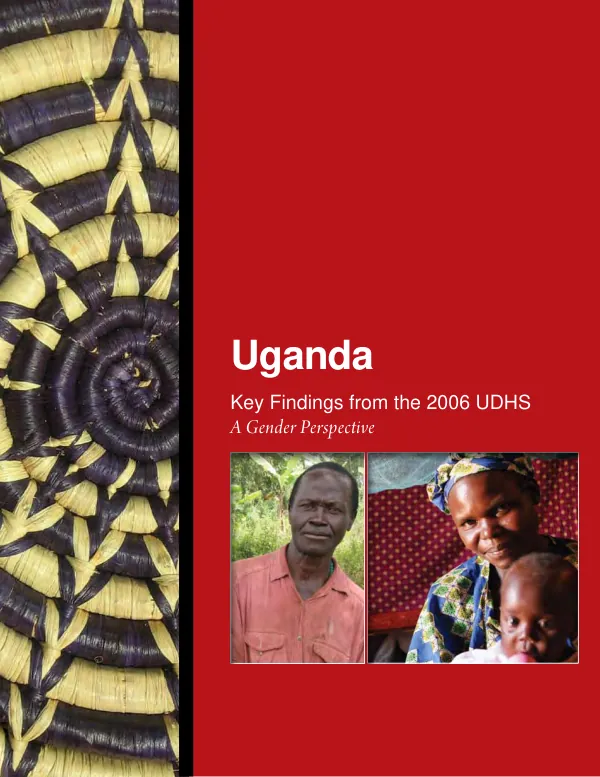
Key findings from the 2006 UDHS : a gender perspective
This report is based on the 2006 Uganda Demographic and Health Survey (UDHS) and is intended to supplement the larger report, which was published in August 2007.
1970
Sign in to readA free account is required to download.
Abstract
It summarizes the key differences between women and men reported in the UDHS and contains additional data tables extracted from information contained in the larger report. This report is intended to accompany the full 2006 UDHS, although it can be understood on its own. It is recommended that readers also consult the full report, if possible, for more complete information on the demographic, health, and family planning status of women and men in Uganda. The 2006 UDHS collected information on fertility and fertility preferences, marriage, sexual activity, awareness and use of family planning methods and breastfeeding practices. In addition, data were collected on the nutritional status of mothers and young children; infant, child, adult and maternal mortality; maternal and child health; knowledge and behaviour regarding HIV/AIDS and other sexually transmitted infections; levels of anaemia and vitamin A deficiency; and gender-based violence. A nationally representative sample of 8,531 women age 15-49 and 2,503 men age 15-54 were interviewed. This sample provides representative estimates of health and demographic indicators for women and men at the national and regional levels and for rural and urban areas. Findings on HIV prevalence in the report are taken from the 2004-05 Uganda HIV/AIDS Sero-Behavioural Survey (UHSBS), published in March 2006. The UHSBS interviewed 10,826 women and 8,830 men age 15-59. The UHSBS provided the first national level estimates of HIV prevalence. Blood samples were taken from eligible men and women age 15-49 to test for HIV. Overall, 89% of eligible women and 83% of eligible men were tested. (Author abstract, modified)
Related documents