USAID. MISSION TO SOMALIA
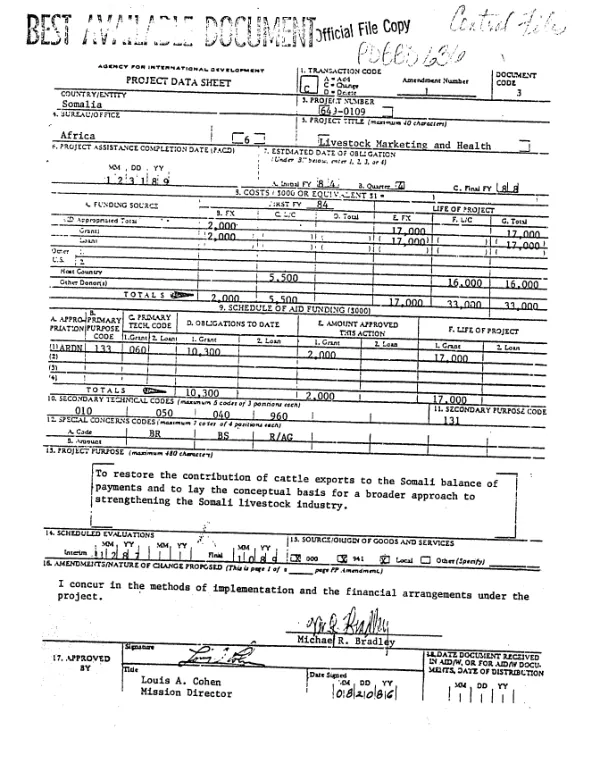
Livestock marketing and health
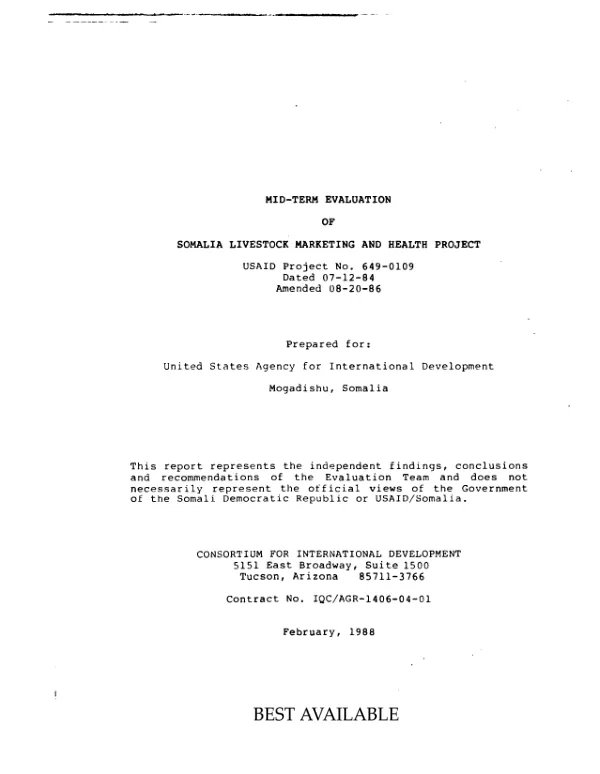
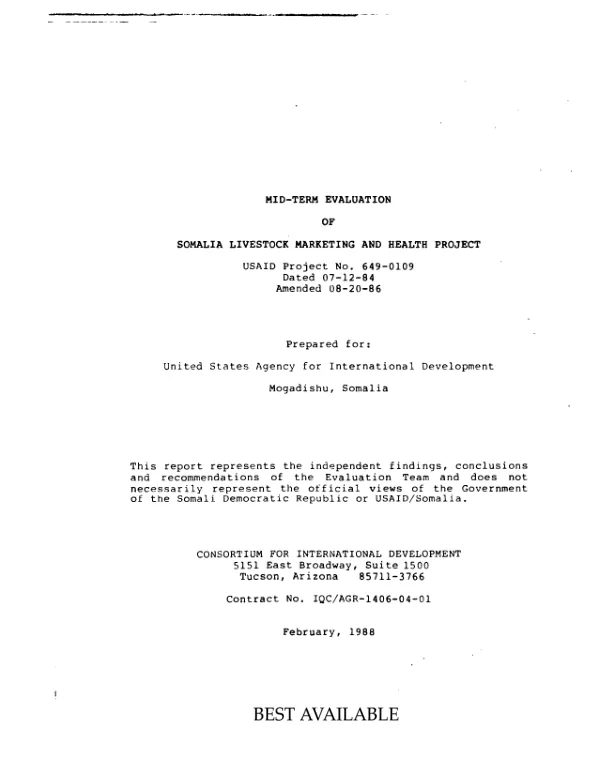
Summarizes attached midterm evaluation (XD-AAY-859-A) of a project to construct and operate a cattle quarantine system as a means of restoring Somalia cattle trade with Saudi Arabia.
1988
Sign in to readA free account is required to download.
Abstract
The project also assists the private sector in fodder production and livestock transport and conducts market studies on the livestock industry. The evaluation covered the period FY84-FY88. Construction of the quarantine station is over 2 years behind schedule because of poor design and inadequate cost estimates, which have caused problems in obtaining suitable specifications and adequate funds for bids. An action decision is to facilitate construction by increasing funding. A recommendation to allow bids from contractors in Code 935 countries was rejected by the Mission. TA was generally competent, although construction delays have limited its effectiveness and some advisors, such as the socioeconomist and private enterprise advisor, had little impact due to lack of USAID/S guidance and inadequate counterpart and logistic support. Studies were completed on international markets and fodder production, and marketing data collection has been established throughout the country. However, these activities are not closely related or necessarily supportive of the project"s primary goal of establishing the quarantine system. The livestock investment fund (LIF) for fodder production equipment has not attracted any applicants, due primarily to lack of credit for producers as well as to uncertain fodder markets, the change from a fixed to a free-market exchange rate, and lack of promotion. An action decision provides for 12 months of LIF TA in forage and equipment and the use of local currency for equipment demonstration. If the LIF is not used within a designated period, it will be eliminated from the project. The evaluation also suggested that (1) U.S. training is probably less efffective than training in African countries with similar conditions; and (2) poor management, A.I.D. bureaucracy, and ineffective communication with the Somali project manager underlie several of the project"s problems. The Mission does not wholly concur with the latter observation. Several lessons were learned. (1) Full design specifications and cost estimates should be done during the design phase of a project with a construction component. (2) If construction is delayed, TA related to the construction should be rescheduled. (3) An evaluation should be conducted immediately when a project falls behind schedule. (4) Emergency relief activities should be simple enough to be accomplished quickly and should not involve high capital investment or institution-building programs.
![CDA forestry [phase I refugee areas project]](https://covers.devme.ai/gen/72447.webp)