USAID DEC
Mali telecommunications : analysis and recommendations for the information and communications special objective
Sign inMANAGEMENT SYSTEMS INTERNATIONAL, INC. (MSI)
Mali telecommunications : analysis and recommendations for the information and communications special objective
This study analyzes Mali"s telecommunications and information access policy environment.
Billings, Jim; Furst, Steve +1 more · 1996
Sign in to readA free account is required to download.
Abstract
(1) There is a general lack of awareness in Mali as to potential misuse of the Global Information Infrastructure, and how that might conflict with societal, cultural, legal norms and behavior. There is reason to closely monitor the activities of Le Counseil Superieure de Communications and Le Comite National d"Egal Acces aux Media d"Etat -- watchdog organizations that could attempt to overstep their authority and become a constraint to open, competitive telecommunications growth. (2) The Ministry of Culture and Communications is developing its policy regarding telecommunications ownership and service provision, including such issues as competition among value-added providers (e.g., Internet and e-mail services) and the continued proliferation of the Rural Radio network. USAID should participate in policy dialogue and formulation in order to encourage an open market. (3) USAID should support the growth of the Internet, still in its nascent stages in Mali, by supporting installation of a state-of-the-art Internet node and of Internet sites at, for example, l"Ecole Nationale Superieure and the Chamber of Commerce. (4) USAID should support establishment of an Information Resources Center. In its early stages, it should be a USAID-financed and -managed entity, serving primarily as a promotional center, the need for which will diminish over time with increased knowledge about and use of information tools and technologies in Mali. If after 24-30 months it is decided that it should become a permanent fixture, a plan to privatize it should be developed. (5) USAID should also give high priority to supporting the training, upkeep, and maintenance of rural radio stations operating where USAID"s partners are working. This will enable stations to become more professionally competent and economically sustainable, and play the important role of broadcasting to their listening audience information relevant to the livelihood and growth of their communities.
Related documents
Documents in this collection
 1996
1996USAID DEC
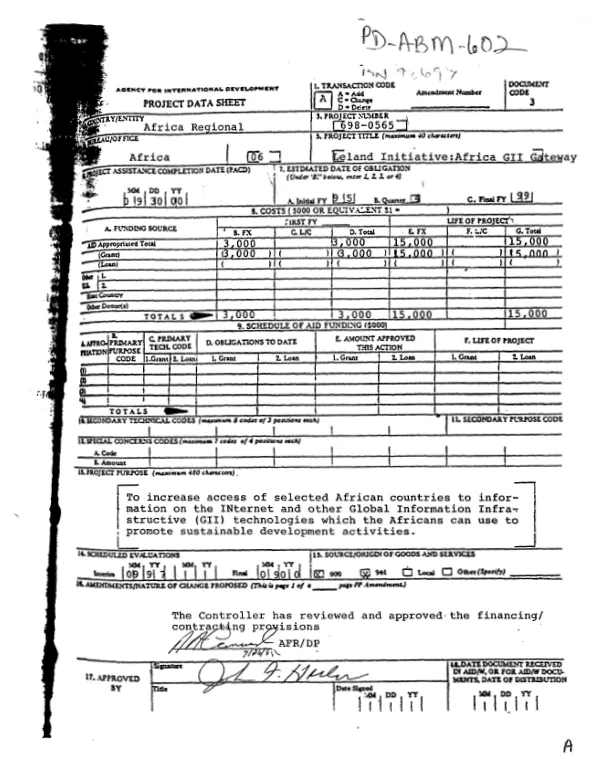
Leland initiative : Africa global information infrastructure gateway project (project no. 698-0565) -- best practices for policy accommodation, technology transfer, and end - user applications of the Internet in the developing world
Open record![Egypt telecommunications master plan II : volume 3 -- recommendations & voice over IP [internet telephony] update](https://covers.devme.ai/gen/23376.webp) 2004
2004USAID DEC