USAID. MISSION TO JORDAN
Management development
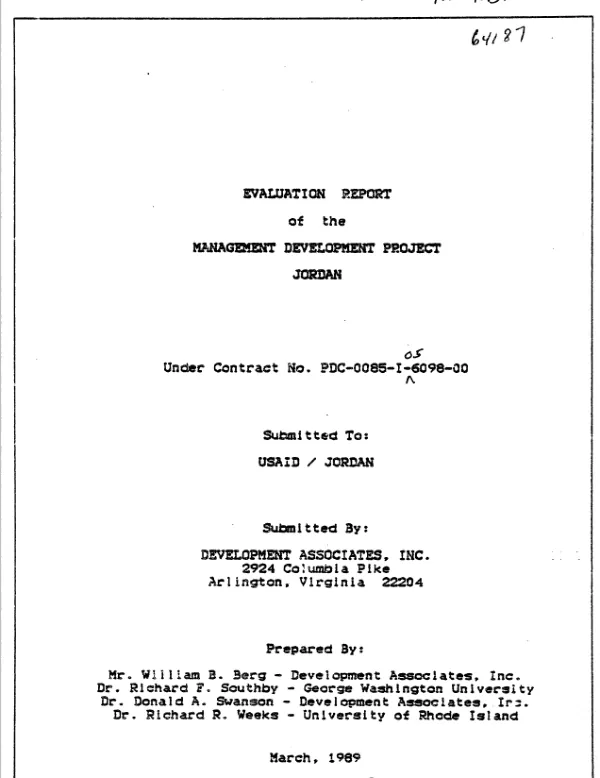
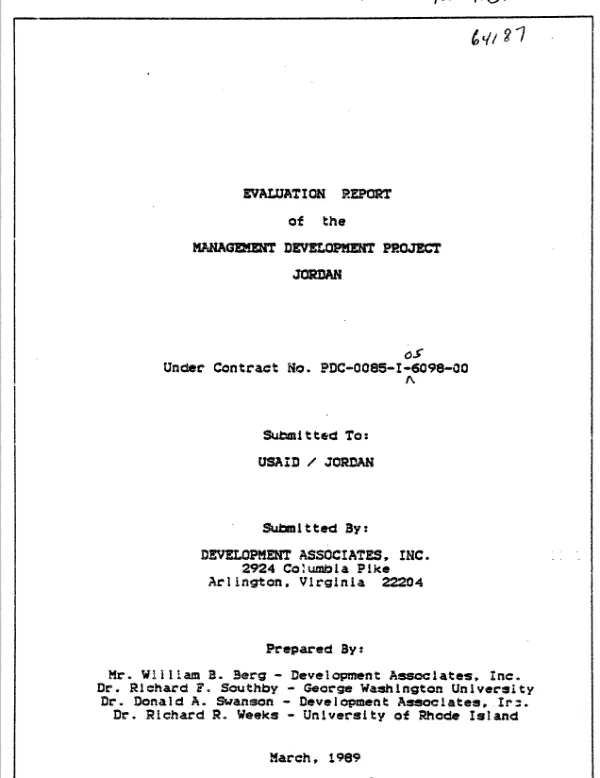
Summarizes mid-term evaluation (XD-ABA-233-A) of a project to support three business management programs in Jordan: Master in Business Administration (MBA) and Master in Health Services Management (HSMP) at the University of Jordan"s Faculty of Economics and Administrative Sciences (FFAS), and short-term training at the Jordan Institute of Management (JIM).
1989
Sign in to readA free account is required to download.

Abstract
The evaluation covered the period FY84-3/89. After nearly six years, the MBA program has graduated only 25 out of more than 200 students admitted. This is due to its part-time nature, weak connections to the business community, and questions of quality. The program does not meet standards set by the American Assembly of Collegiate Schools in Business (AACSB) in the following: size of teaching and administrative staff; teaching loads; level of research; and required courses in production management, legal environment, and policy analysis. It has been difficult for FFAS to recruit and retain qualified staff because of low salaries. HSMP is having a positive effect and enjoys wide support from the health services community; 28 students have completed the program in about four years. However, the program does not meet AASCB standards in the following areas: number of permanent full-time faculty; level of research; some content areas of the curriculum; lack of departmental status; and the absence of accreditation for the host institution. The program still relies heavily on the presence of an A.I.D.-funded professor, but a project-trained Ph.D. will return in 1989 and another by the end of 1990. JIM is having an impressive impact on the skills of its participants, who are mostly mid-level managers. During the period 1985-1988, JIM trained 3,374 persons, against a six-year target of 3,400. The project has been very successful in developing the skills of JIM staff through both delivery of courses in Jordan and U.S. training. With the new project-funded computer center, JIM has been able to offer courses in computer skills for the first time. However, while the growth in demand for JIM courses has been impressive, it is still inadequate to cover operating costs. JIM needs to establish a long-range strategy and aggressive marketing tactics that build on the positive training climate in the Jordanian business community. A major lesson learned is that training organizations are generally more responsive to the needs of the business community if they must cover a major portion of their costs through user charges. (Author abstract, modified)
Related documents