AFRICAN MEDICAL AND RESEARCH FOUNDATION (AMREF)
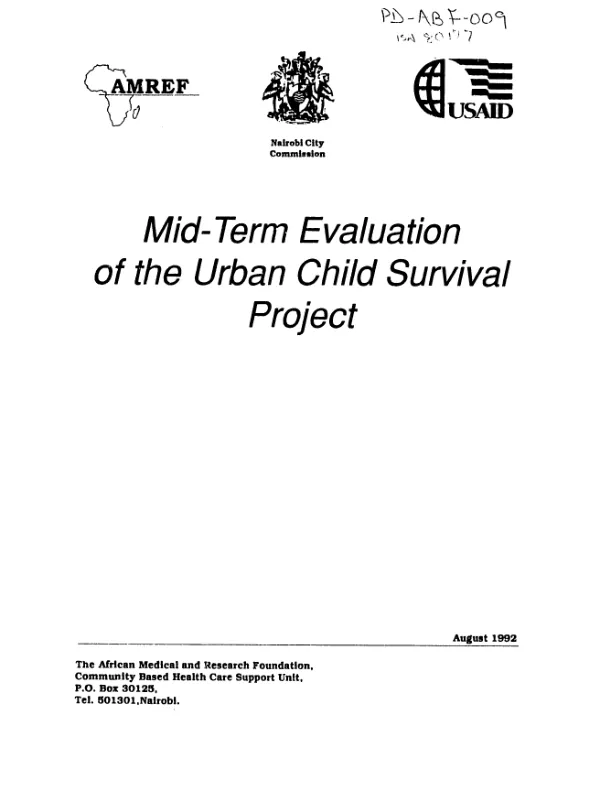
Mid-term evaluation of the urban child survival project
Evaluates project to expand community-based maternal/child health interventions into two slum areas of Nairobi, The evaluation compared information from a 1992 rapid assessment survey and routine and community based information systems with data from a 1990 baseline survey.
1992
Sign in to readA free account is required to download.
Abstract
The circumstances under which the project has taken place have made achievement of its purposes difficult. For example, improvements in sanitation and reductions in child diarrhea have been impeded due to a water shortage caused by drought. Deterioration in the purchasing power of slum residents, attributed to structural adjustment, has frustrated efforts to improve children's nutritional status. Problems in coordination between the Nairobi City Commission and the Provincial Commissioner's Office have also limited achievements. The immunization program has been a bright spot. Coverage is at 87%, surpassing the objective of 65%, and resulting in a great reduction in vaccine-preventable diseases. Although malnutrition is low, the goal of reducing the percentage of malnourished children to 30% cannot be said to have been achieved since data show an overall deterioration in children's growth patterns; the high incidence of diarrhea and diminished purchasing power of families are mainly to blame. The percentage of eligible women using family planning services did not change from 1990, remaining at about 46%. While data on clinic attendance for pregnant women were not available, about 67% of women had registered at a health facility for prenatal care, and it was felt that attendance had increased; the recent introduction of fees may trigger a reversal of this trend. HIV/AIDS prevention activities were incorporated into the project during implementation, and have contributed to an increase in condom use by a factor of over 100. AIDS prevention has utilizing an innovative approach in which AIDS patients participate as facilitators in community AIDS awareness workshops. In regard to malaria prevention and control, the project has begun to establish a laboratory capacity, and has initiated community activities to clear drains and other potential mosquito breeding places. There have been enough community health workers (CHW's) trained to achieve an average of 38 households per CHW (vs. a target of 60), but due to a high dropout rate, the current ratio is 62 households per CHW. A need for financial compensation was a common underlying reason for dropouts. For this and other reasons related to project sustainability, arrangements should be made to begin implementing cost recovery and community co-financing strategies. Finally, though the community-based health information system developed by the project has been useful, high turnover among administrators has detracted from its usefulness. It is recommended that USAID extend the project 3 years to allow time to complete the processes which have been successfully initiated, and provide financial support for income generating activities. Improving sanitation and helping slum residents generate income to support health activities will be crucial to success.
![MIHV [Minnesota International Health Volunteers] Dagoretti child survival project : mid-term evaluation report](https://covers.devme.ai/gen/5781.webp)
![MIHV [Minnesota International Health Volunteers] Dagoretti child survival project : mid-term evaluation report](https://covers.devme.ai/gen/57567.webp)