USAID. BUR. FOR LATIN AMERICA AND THE CARIBBEAN
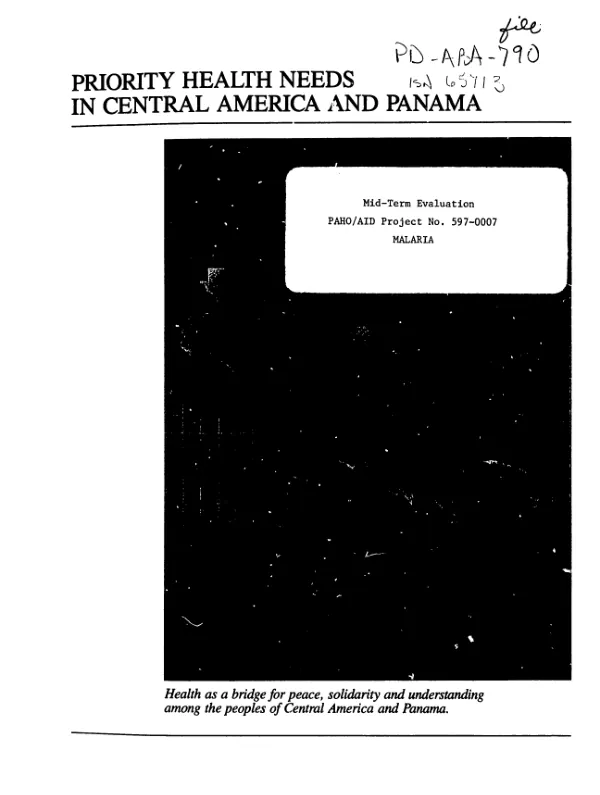
Mid-term evaluation : PAHO/AID project no. 597-0007 -- essential drugs
Mid-term evaluation of the Malaria and Essential Drugs Project in Central America.
Sign in to readA free account is required to download.
Abstract
The evaluation covers the period through 1988 and covers the project's essential drugs component. The project has been implemented with a high degree of effectiveness, with all annually planned training courses completed and prototype systems of drug utilization well developed, particularly in university hospitals and social security institutes. Essential drugs programs have been established or strengthened throughout the subregion, and improvements in drug resource management have occurred in many institutions. Although emphasis has been on the technical- scientific subsystem, the operational subsystem will receive more attention during the fourth year. The subregional approach has been effective in establishing exchanges of information and stimulating ideas among key professionals. Moreover, the approach has led to significant utilization of local professionals in project activities, and allowed the project to take advantage of economies of scale in the production of educational materials, the use of TA consultancies, etc. As a relatively new effort, the project has a tendency towards a multiplicity of activities. It has also encountered some problems in the drug price information exchange network and the publication of guidelines for warehouses planning, design, and construction. A major lesson learned is that the Central American subregion has a limited number of trained persons in the pharmaceutical field and thus a limited capacity to absorb technical cooperation. There is also a limited capacity in the subregion to train professionals in essential drugs, mandating a need for swift project intervention in providing such training. Continued close and active project management is essential to create the conditions for appropriate technical activities to be developed. Project start-up was slower than expected because of the different stages of development in each participating country. A four-year project does not necessarily translate into four years of activities in all countries. A four year project extension is recommended. Emphasis should be placed on, inter alia, greater subregional exchange of information and continuing education for health workers involved in essential drugs programs. Reports on national-level programs in Belize, Honduras, Guatemala, El Salvador, Costa Rica, and Panama are included in the evaluation.
Related documents