USAID DEC
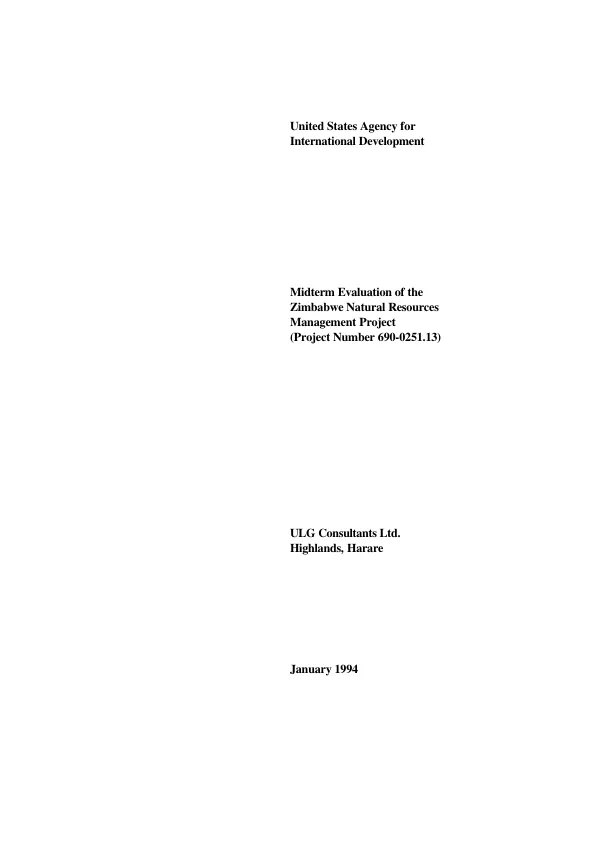
Midterm evaluation of the Zimbabwe natural resources management project (project number 690-0251.13)
Sign inULG CONSULTANTS LTD.
Midterm evaluation of the Zimbabwe natural resources management project (project number 690-0251.13)
Evaluates a project to demonstrate practical methods for sustainable utilization and conservation of natural resources in Zimbabwe.
Paskett, C.|Mupawaenda, A. · 1993
Sign in to readA free account is required to download.
Abstract
Mid-term evaluation covers the period 8/89-1/94 and is based in part on interviews with wildlife experts and project beneficiaries. The project is providing meaningful benefits to residents of the project area, but suffers from several errors in design and from misunderstandings concerning the Grant Agreement. Key problems are as follows. (1) Divisions have arisen between USAID managers, based in Harare, who are concerned with administration and accounting, and host country agencies, based in Bulawayo, who are concerned with resource management and rural livelihoods. (2) The project is isolated from Zimbabwe's CAMPFIRE movement, which tends to ignore the project area on the grounds that it is already serviced by USAID. USAID's view that the project area has a geographical integrity of its own reinforces this isolation. (3) Although the project is part of a larger regional project, it has failed to achieve progress in important regional wildlife issues. (4) A superficial Environmental Impact Assessment, together with a lack of engineering review, have made the sustainability of infrastructure development questionable and exposed the project to unknown quantities of risk. (5) Project implementation is rarely from the bottom up, leading some communities to mistrust the project. The problem becomes particularly acute when it diminishes the financial benefits which households regard as their due or excludes some wards from investment. Lessons learned include the following. (1) Inadequate scrutiny of design documents increases the likelihood of difficulties during implementation. (2) Before entering into agreements with USAID, participating agencies need to understand the restrictions they will encounter. (3) Difficulties between USAID and its implementing partners are unlikely to vanish as a result of workshops and meetings. Sympathy and understanding are also important. (4) When problems owe their source to specific individuals within the USAID hierarchy, those individuals should be given counsel. (5) Regarding this evaluation, 36 pages of terms of reference are excessive for an effort lasting only several weeks.
Related documents
![Mid-term review of LIFE-II and assessment of the Namibia national CBNRM [community-based natural resources management] programme : final report](https://covers.devme.ai/gen/72753.webp)
![COMPASS [community partnerships for sustainable resource management in Malawi] assessment : 2001](https://covers.devme.ai/gen/5048.webp)
![Mid-term review of LIFE-II and assessment of the Namibia national CBNRM [community-based natural resources management] programme : final report](https://covers.devme.ai/gen/5490.webp)
![COMPASS [community partnerships for sustainable resource management in Malawi] assessment : 2001](https://covers.devme.ai/gen/64002.webp)