USAID DEC
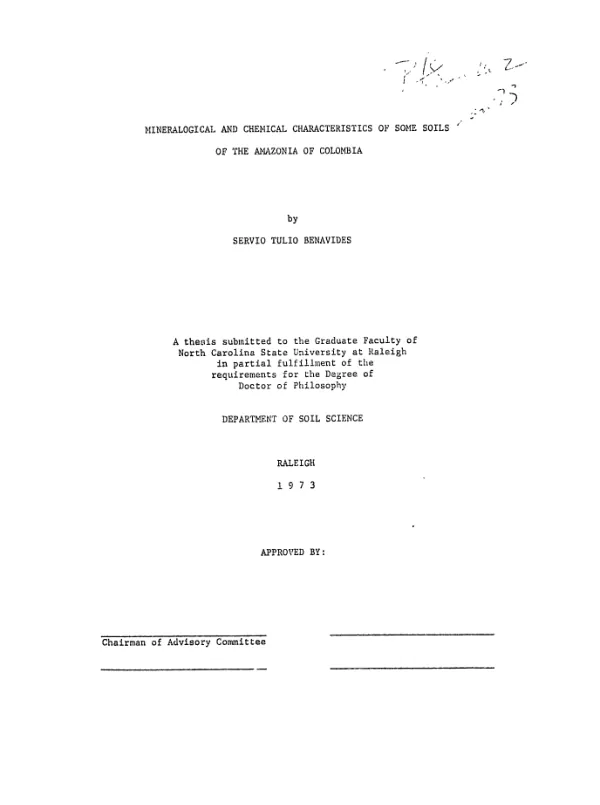
Mineralogical and chemical characteristics of some soils of the Amazonia of Colombia
Sign inNORTH CAROLINA STATE UNIVERSITY
Mineralogical and chemical characteristics of some soils of the Amazonia of Colombia
Amazonia constitutes the southeast portion of Colombia and consists of undulating Cenozoic sediments and outcrops of older materials including Guyana Shield rocks.
Benavides, S. T. · 1970
Sign in to readA free account is required to download.
Abstract
The mean annual temperature is 28 degrees C and the mean annual rainfall is 3000 mm with no dry season. Amazonia is covered by evergreen tropical forest. Physical, mineralogical and chemical characteristics and the classification of nine soil profiles were established in this region. The soils were classified according to the U.S. Soil Taxonomy as Inceptisols, Inceptisols intergrading toward Oxisols and Ultisols. No one subsoil horizon of the soil profiles used in this study meet all the requirements of the oxic horizon, since they contain more than traces of micas and other 2: 1 clay minerals. Amazon soils used in the present study have a low fertility status which may limit their agricultural suitability. None of the soil features observed indicate that insurmountable conditions are present that would impede development of agriculture. For commercial crop production, liming and fertilization must constitute a fundamental part of any soil management program. To bring these lands into production, the economic feasibility of management practices must be established.
Connected topics