CONSERVATION STRATEGY FUND
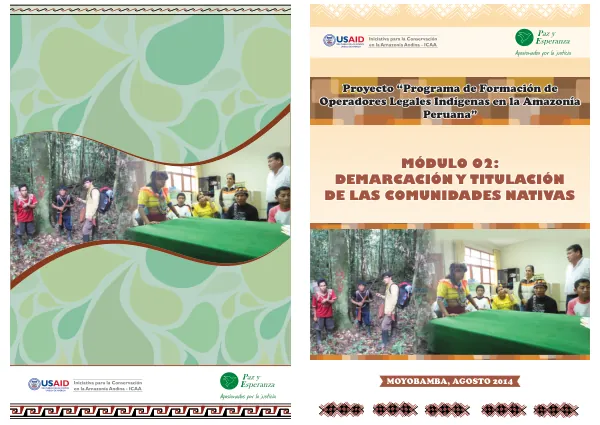
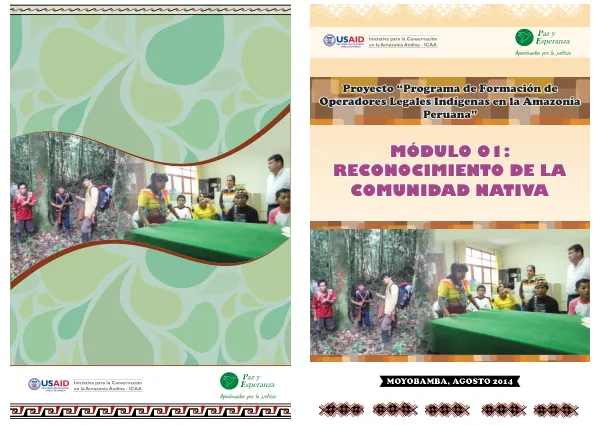
MÓDULO 01: RECONOCIMIENTO DE LA COMUNIDAD NATIVA
The recognition of indigenous communities in Peru is a crucial step in acknowledging their existence and rights.
2014 · 6 pages
Sign in to readA free account is required to download.
Abstract
The process of recognition involves several stages, which are outlined in the Ley N° 27972 - Ley Orgánica de Municipalidades. This law divides the administration of the government into a national, regional, and local level. The Poderes Políticos del Estado, or the three branches of government, are responsible for implementing and enforcing laws. These branches include the Poder Ejecutivo, Poder Legislativo, and Poder Judicial. Additionally, there are Organismos Autónomos, or autonomous entities, that play a complementary role in the functioning of the state. These entities include the Asamblea Nacional de Rectores, Banco Central de Reserva del Perú, and others. The recognition of a community nativa involves six steps, which are outlined in the document. These steps include the Asamblea Comunal de la Comunidad Nativa, Solicitud a Dirección Regional de Agricultura, Fase de Evaluación, Fase de Campo, Fase de Procesamiento, and RESOLUCIÓN DE RECONOCIMIENTO DE LA COMUNIDAD NATIVA. The recognition of a community nativa is a formal acknowledgment of its existence, and it is the responsibility of the Direcciones Regionales de Agricultura to order the inscription of the personería jurídica in the libro de Comunidad Nativa in the Dirección Regional Agraria and in the Superintendencia Nacional de Registros Públicos (SUNARP). The document also highlights the importance of international treaties and conventions, such as the Convenio 169 OIT, which recognizes the rights of indigenous peoples. The Constitución Política del Perú and the Ley de Comunidades Nativas y de Desarrollo Agrario de la Selva y Ceja de Selva also play a crucial role in the recognition of indigenous communities. The recognition of a community nativa is a declarative act, and it does not constitute the creation of rights. However, it is an essential step in acknowledging the existence and rights of indigenous communities in Peru. The document provides a comprehensive overview of the process of recognition and the laws and regulations that govern it. The Ley N° 27972 - Ley Orgánica de Municipalidades is a key piece of legislation that outlines the process of recognition of indigenous communities. The law divides the administration of the government into a national, regional, and local level and outlines the responsibilities of each branch of government. The law also provides a framework for the recognition of indigenous communities and the inscription of their personería jurídica. The recognition of indigenous communities is a complex process that involves several stages and requires the involvement of various government agencies. The document provides a detailed overview of the process and the laws and regulations that govern it. The recognition of indigenous communities is an essential step in acknowledging their existence and rights and is a crucial aspect of Peru's commitment to protecting the rights of indigenous peoples.
Related documents