USAID DEC
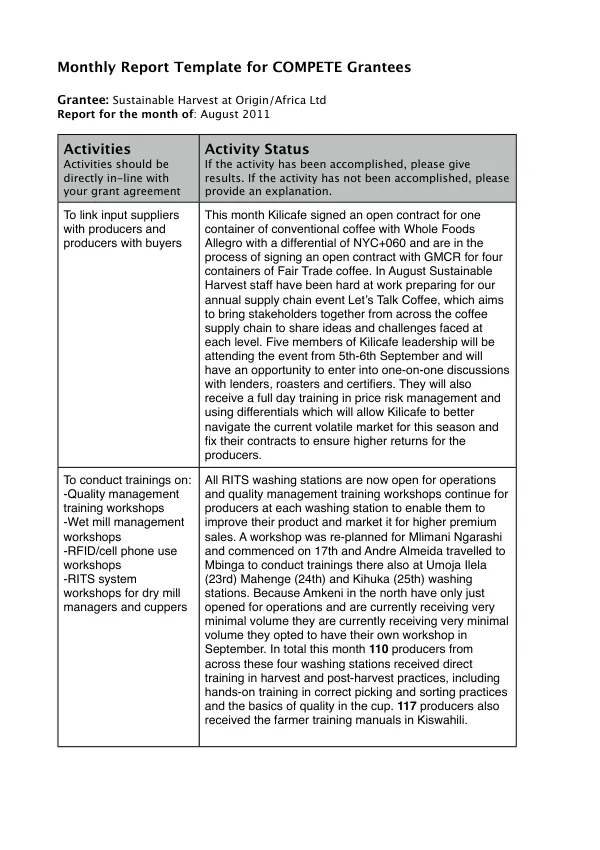
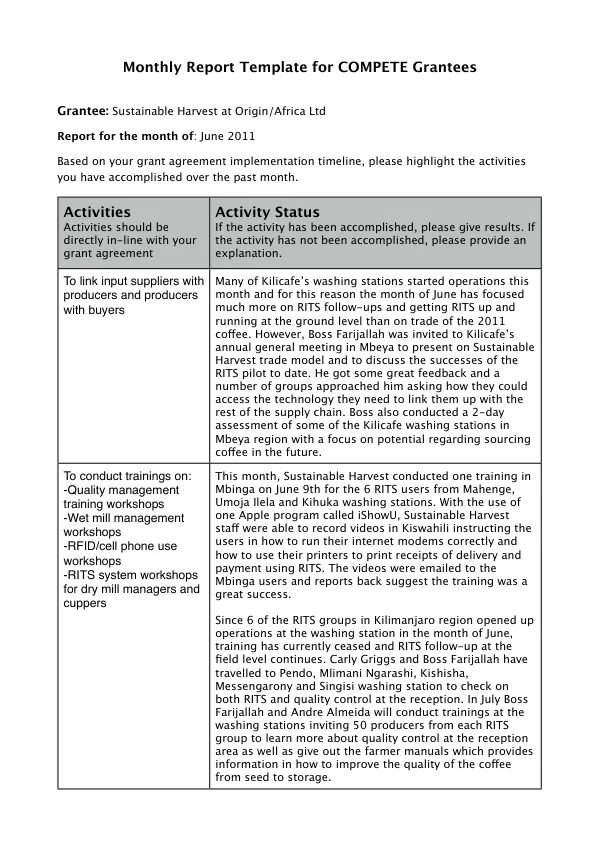
Monthly Report Template for COMPETE Grantees
Sustainable Harvest at Origin/Africa Ltd, a COMPETE grantee, submitted a monthly report for June 2011.
2011 · 2 pages
Sign in to readA free account is required to download.
Abstract
The report highlights activities accomplished during the past month, which align with the grant agreement's implementation timeline. Many of Kilicafe's washing stations began operations in June, shifting the focus from trade of the 2011 coffee to RITS follow-ups and getting RITS up and running at the ground level. Boss Farijallah attended Kilicafe's annual general meeting in Mbeya, presenting on the Sustainable Harvest trade model and discussing the successes of the RITS pilot to date. He received positive feedback and interest from several groups in accessing the technology needed to link them with the rest of the supply chain. Additionally, Boss conducted a 2-day assessment of some Kilicafe washing stations in the Mbeya region, focusing on potential sourcing of coffee in the future. Sustainable Harvest conducted one training in Mbinga on June 9th for 6 RITS users from Mahenge, Umoja Ilela, and Kihuka washing stations. The training utilized an Apple program called iShowU to record videos in Kiswahili instructing users on how to run their internet modems correctly and use their printers to print receipts of delivery and payment using RITS. Reports suggest the training was a success. However, training has ceased due to the opening of 6 RITS groups in Kilimanjaro region, and RITS follow-up at the field level continues. In June, 7 washing stations tracked 69 batches of coffee using RITS, amounting to a total of 24,731 kilograms of cherry being tracked from reception to storage. Furthermore, 363 farmer advance payments were made using the RITS system and receipt printers provided through the program in 2011, totaling 1,990,200 Tanzanian Shillings (approximately 1,330 USD). Additional comments indicate that equipment sourcing problems delayed the arrival of solar-kits in Moshi, preventing their installation in June. However, the equipment is expected to arrive on July 2nd, and it is anticipated that Kishisha and Pendo in Kilimanjaro area, as well as Kihuka, Umoja Ilela, and Mahenge in Mbinga, will have power at their washing stations for the first time.
Related documents