JOHN SNOW, INC. (JSI)
MotherCare experience in Indonesia : final report [evaluation]
Final evaluation of efforts (1994-7/00) of the MotherCare project to support and enhance the ongoing Safe Motherhood initiative in three target districts (Banjar, Barito Kuala, and Hulu Sungai Selatan) in South Kalimantan, Indonesia.
Achadi, Endang|Beck, Diana · 2000
Sign in to readA free account is required to download.
![MotherCare experience in Indonesia : final report [evaluation]](https://covers.devme.ai/gen/5548.webp)
Abstract
The project was implemented in collaboration with the Indonesian Ministry of Health (MOH) and Ikatan Bidan Indonesia (IBI), the national midwife association. MotherCare-assisted interventions addressed four main areas: (1) improved quality of services through inservice training of midwives based in villages, health centers, and hospitals; a peer review and continuing education system implemented by IBI's district chapter; and a maternal and perinatal audit system in the three districts; (2) improved referral by strengthening the skills of village midwives to manage and refer complications, as well as by improving their relationship with the traditional birth attendants (TBA) and service providers in referral facilities; (3) behavioral change in the community and of providers through an integrated information, education, and communications (IEC) strategy; and (4) the formulation of policies supporting these initiatives. The Government of Indonesia (GOI) has addressed increased coverage of services by placing a midwife in each village and ensuring the presence of at least one doctor with obstetric skills in each district. In addition, efforts were made to facilitate financial access to services for the poor. The GOI's goal of bringing high quality obstetric services closer to the women who need it has clearly been successful. The MotherCare program has effectively contributed to this goal by strengthening the GOI's efforts through the training and continuing education of midwives in life-saving, communication, and counseling skills; by initiating and supporting the maternal and perinatal audit process; and by providing women and their families information on how to make pregnancy safer. All these activities were implemented as part of an integrated package, and their mutually reinforcing effect was probably instrumental in their success. In considering which activities to expand upon, the MOH will not only have to decide which of these activities were "value for money", but also the extent to which an integrated approach was essential in effecting change. The success of the training program in improving midwives' skills and confidence, for example, was due at least in part to the continuing and regular supervision of midwives through the peer review and audit meetings. Similarly, the increased collaboration between midwives and TBAs was the result of repeated reinforcements during training sessions and audit meetings. One of the key challenges facing the GOI is how to sustain the extensive village-based midwifery program. A short in-service training program cannot substitute for a 3- year program, and the training needs identified by MotherCare should be incorporated into existing medical, nursing, and midwifery education programs to ensure that doctors, midwives, and nurses graduate with skills adequate to the tasks expected of them. However, maternal health will not improve through midwifery training alone. Policy decisions and actions are still required to increase referral and ensure quality services at referral level. Most importantly, concerted efforts and commitment will be needed to contain costs of maternal health services and to make services affordable for the poor.
Related documents
Documents in this collection
 1970
1970USAID DEC
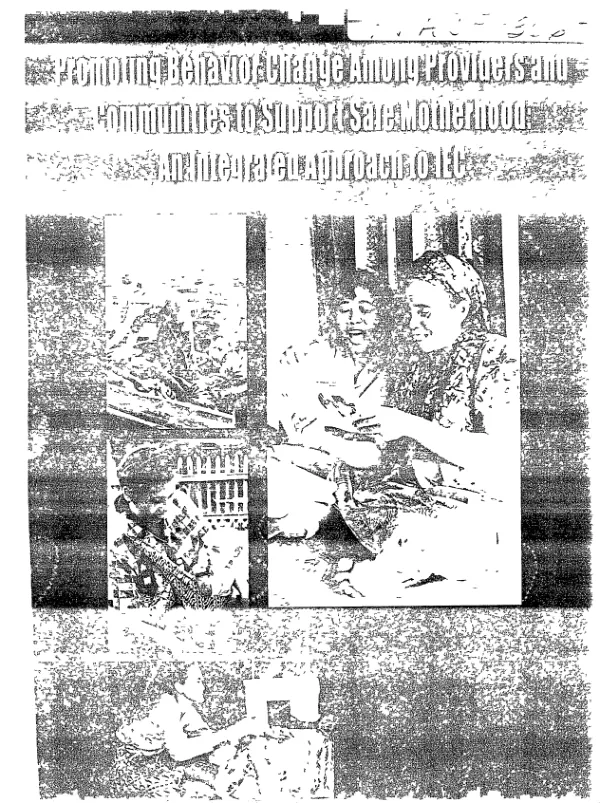
Promoting behavior change among providers and communities to support safe motherhood : an integrated approach to IEC (information, education and communication) -- a guide for program planners
Open record 1995
1995USAID DEC