USAID. BUR. FOR PROGRAM AND POLICY COORDINATION. CENTER FOR DEVELOPMENT INFORMATION AND EVALUATION (CDIE)
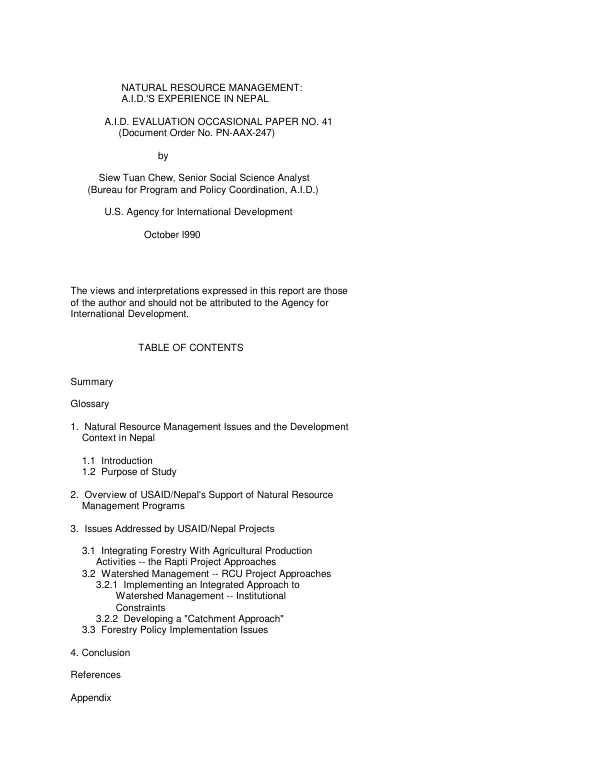
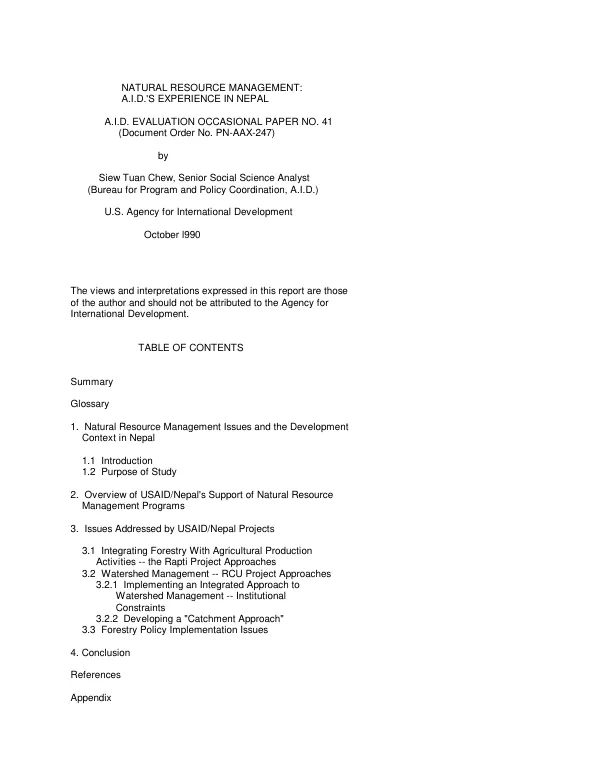
Natural resource management : A.I.D.'s experience in Nepal
Since 1980, A.I.D.
Chew, Siew Tuan · 1990
Sign in to readA free account is required to download.
Abstract
has invested about $77 million in projects to improve Nepal's natural resource management, particularly in the hill regions where most poor farmers live. This paper reviews the two largest projects -- Rapti Area Development and Resource Conservation and Utilization (RCU); it also describes how USAID/Nepal is supporting multidonor forestry projects. The review identifies several important lessons. (1) USAID/Nepal has been more effective in influencing policymaking and institutional changes when supporting multidonor projects than when acting alone. (2) The Rapti and RCU projects underscore the difficulty of implementing large projects that involve technologies far beyond the host country's capabilities. More importantly, they demonstrate that support for resource conservation need not always be technically sophisticated, but sometimes can -- and should -- begin by integrating research and extension activities into existing agricultural and rural development projects. Such activities should concentrate on developing simple, low-cost technologies that can be undertaken and sustained by farmers individually or on a communal basis to improve livestock management, replant forests, and curb soil erosion on hill slopes and in catchment areas. To gain farmer support, such activities should increase livestock and tree production without compromising food crop production. (3) Efforts to decentralize forestry management should not stop at the local government but should involve the affected communities themselves.