CENTERS FOR DISEASE CONTROL (CDC) (U.S.)
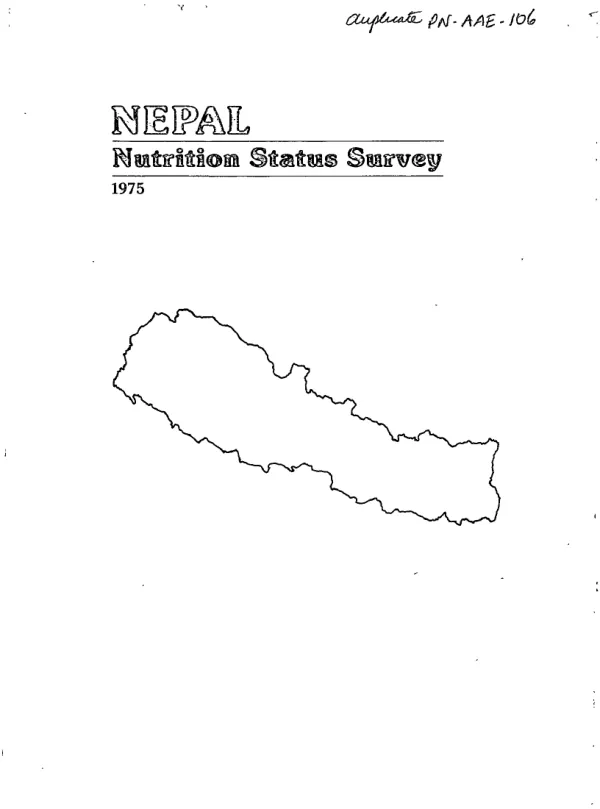
Nepal nutrition status survey : Jan. 1975 to May, 1975
The main objective of the 1975 Nepal nutrition status survey was to provide statistically valid data on the type, extent, and distribution of protein energy undernutrition in Nepal using anthropometric measurements and selected clinical criteria.
1970
Sign in to readA free account is required to download.
Abstract
Qualification of the prevalence of anemia was a second goal. The survey methodology can be used to assess the effects of nutrition intervention at later points in time. This report includes the survey design, sampling methods, survey items, anthropometry methods, hematology, data preparation, and special group consisting of four hundred eighty-six children. Survey results describe the distribution of sample sites, age and sex distribution, weight-for-height, height-for-age, weight-for-age, arm circumference for height and skinfold for age. Caste, pedal edema, anemia levels as measured by hemoglobin determinations, and prevalence of naturally acquired measles by serological survey for antibodies are also described. The discussion at the end analyzes the results of the survey and the meaning for Nepal. Protein energy undernutrition in rural Nepal is a general problem which differs in various geopolitical units. The wasting and stunting sector of undernutrition calls for some type of priority action. Infants and children through 35 months are most seriously affected. The pattern could indicate a general maternal inability to provide adequate milk, poor quantity of weaning foods and the young child"s inability to compete successfully in the family food chain. Those initially stunted probably remain permanently behind in linear growth. A baseline of nutrition status emerges which the government can use as a guideline in determining methods and priorities of intervention.