PURDUE UNIVERSITY
Observation on the Guyanese livestock industry
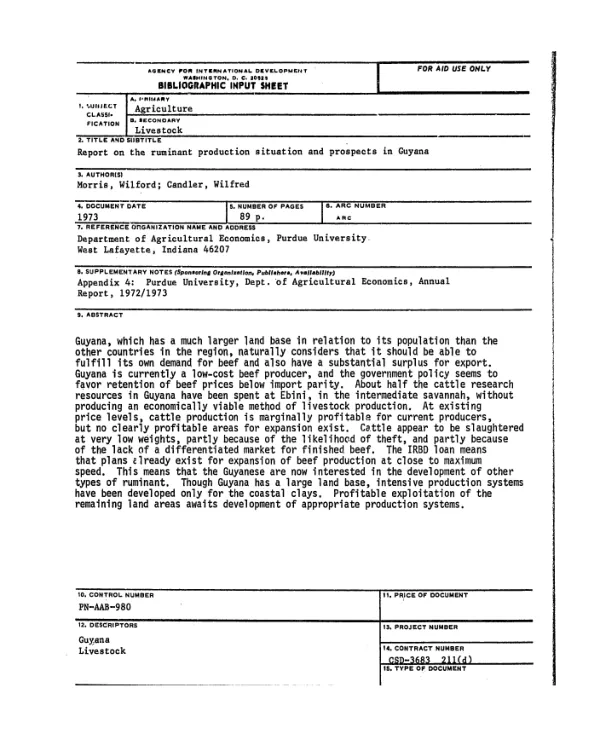
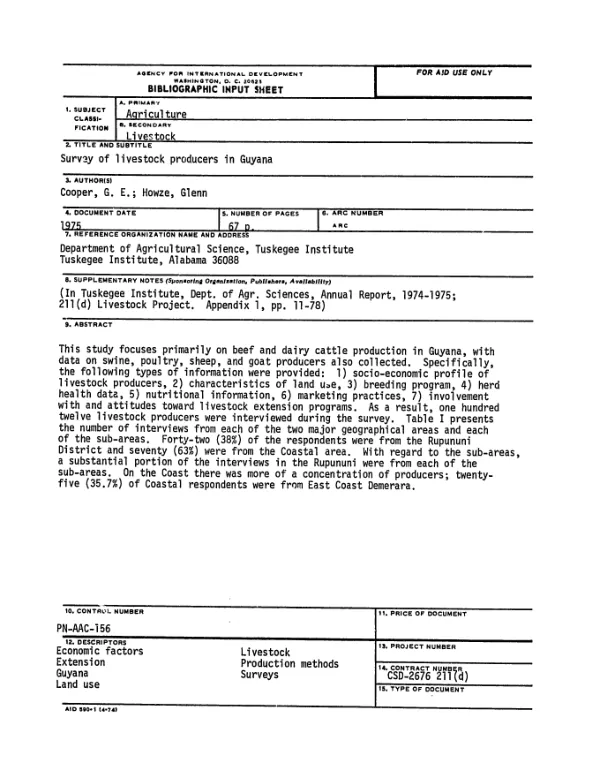
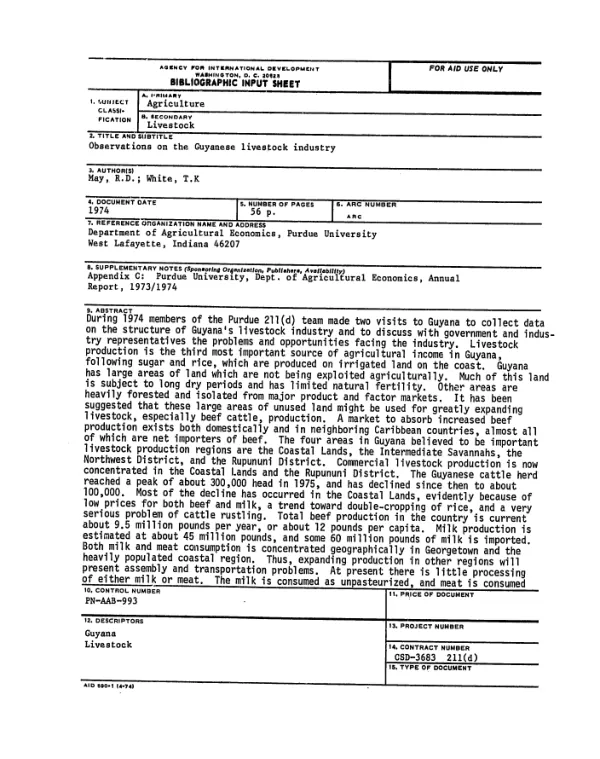
During 1974 members of the Purdue 211 (d) team made two visits to Guyana to collect data on the structure of Guyana"s livestock industry and to discuss with government and industry representatives the problems and opportunities facing the industry.
May, R. D.; White, T. K. · 1970
Sign in to readA free account is required to download.
Abstract
Livestock production is the third most important source of agricultural income in Guyana, following sugar and rice, which are produced on irrigated land on the coast. Guyana has large areas of land which are not being exploited agriculturally. Much of this land is subject to long dry periods and has limited natural fertility. Other areas are heavily forested and isolated from major product and factor markets. It has been suggested that these large areas of unused land might be used for greatly explanding livestock, especially beef cattle, production. A market to absorb increased beef production exists both domestically and in neighboring Caribbean countries, almost all of which are net importers of beef. The four areas in Guyana believed to be important livestock production regions are the Coastal Lands, the Intermediate Savannahs, the Northwest District, and the Rupununi District. Commercial livestock production is now concentrated in the Costal Lands and the Rupununi District. The Guyanese cattle herd reached a peak of about 300,000 head in 1975, and has declined since then to about 100,000. Most of the decline has occurred in the Coastal Lands, evidently because of low prices for both beef and milk, a trend toward double-cropping of rice, and a very serious problem of cattle rustling. Total beef production in the country is current about 9.5 million pounds per year, or about 12 pounds per capita. Milk production is estimated at about 45 million pounds, and some 60 million pounds of milk is imported. Both milk and meat consumption is concentrated geographically in Georgetown and the heavily populated coastal region. Thus, expanding production in other regions will present assembly and transportation problems. At present there is little processing of either milk or meat. The milk is consumed as unpasteurized, and meat is consumed fresh - within two or three days after slaughter.