WINROCK INTERNATIONAL ENVIRONMENTAL ALLIANCE
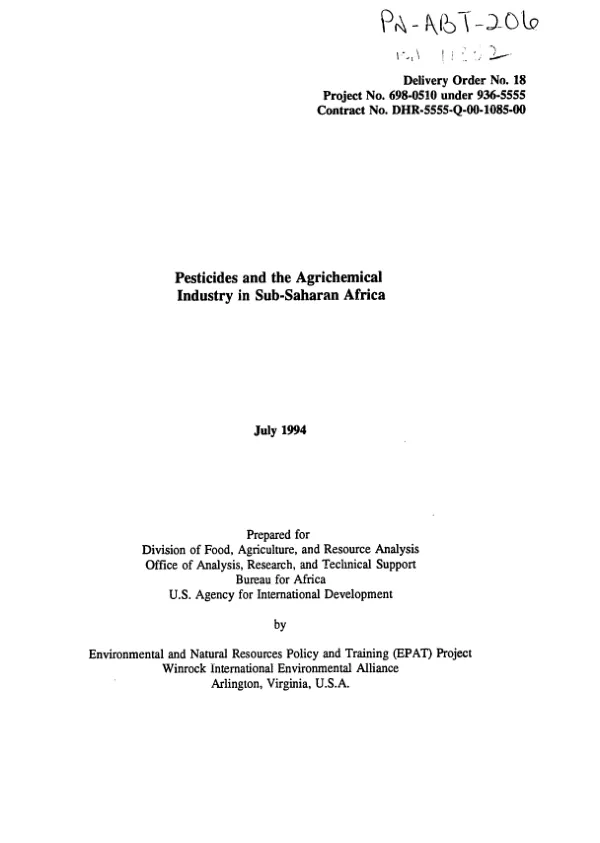
Pesticides and the agrichemical industry in sub-Saharan Africa
In this report, pesticide use in sub-Saharan Africa is reviewed as a first step in an effort to examine the environmental implications of policy initiatives relating to pesticides and the potential impact of these initiatives on incentives to use integrated pest management (IPM).
1994
Sign in to readA free account is required to download.
Abstract
The report: (1) analyzes the markets, products, and target commodities of the major agrochemical companies in the region; (2) provides detailed reports on pesticide use and IPM in Zimbabwe, Kenya, and Cote d"Ivoire and short reports on 22 other countries; (3) describes trends in cotton production and pesticide use in a number of nations; and (4) discusses problems associated with the regulation and international trade of pesticides and toxic substances and how they relate to Africa and the developing world. According to the report, the use of chemical pesticides has increased in nations with an expanding agricultural sector, stable political conditions, and economies not intimately linked to world markets for raw agricultural commodities. In nations that rely on exports of raw cash crops such as cotton or tobacco to generate a major portion of national income, pesticide use is linked directly to the crop"s world market price. However, agricultural prosperity through extensive use of pesticides also leads to health and environmental problems, and while many African nations include IPM in their agricultural policy, cheap, effective, easily managed alternatives have yet to be introduced on a scale large enough to compete with chemical pesticides. Recommendations for donors in these areas are provided. Includes bibliography.