USAID DEC
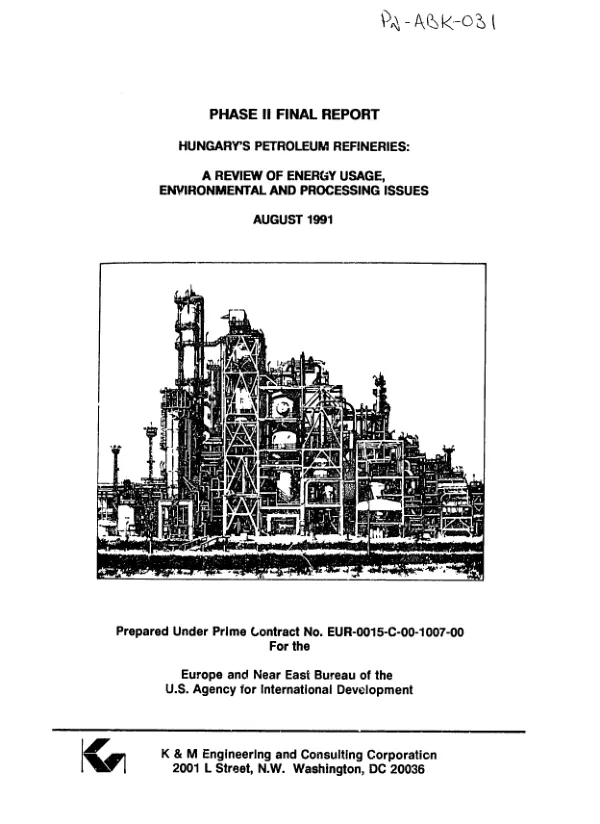
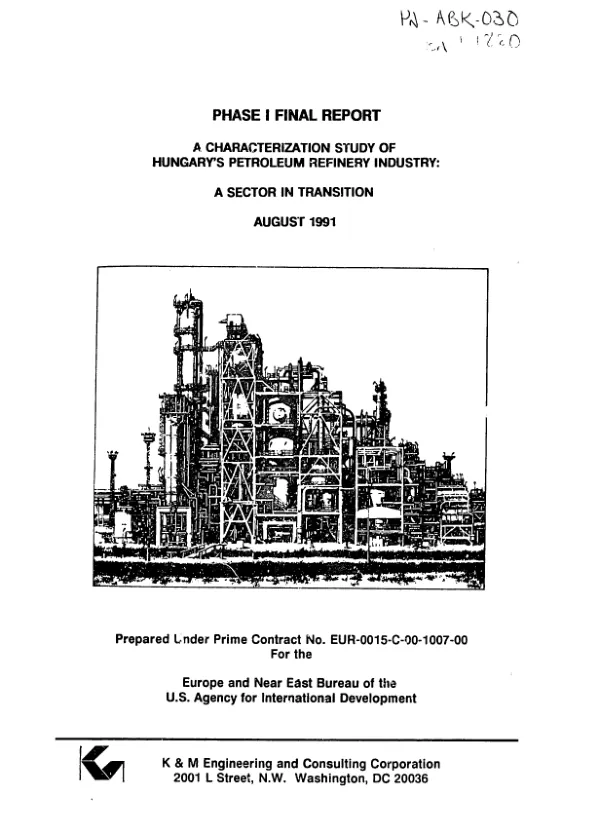
Phase I final report -- a characterization study of Hungary"s petroleum refinery industry : a sector in transition
Sign inK & M ENGINEERING AND CONSULTING CORP.
Phase I final report -- a characterization study of Hungary"s petroleum refinery industry : a sector in transition
Part of a USAID effort to assist Hungary"s oil refinery sector during a period of transition, this report reviews the sector, with emphasis on the two major refineries -- DKV and TIPO.
1991
Sign in to readA free account is required to download.
Abstract
Key findings are as follows. (1) DKV and TIPO staffs are superbly qualified and up to date and have aggressively promoted energy conservation for a decade. Environmental compliance lags considerably behind the West, however, especially at the older DKV facility, while the more modern TIPO is only operating at 33% capacity. (2) Refinery managers are facing serious problems as the country moves from a command to a market economy. Some of the most serious of these problems, which are beginning to impede the operating efficiency of both refineries, include: feedstock disruptions brought on by the curtailment of Soviet crude exports and dramatically increased prices; radical swings in the chemical and physical properties of refinery feedstocks as crude oil purchasers scramble to locate more stable supplies; product dislocations; growing public awareness of environmental protection issues, especially in communities near major point- source polluters; tighter operating and capital improvement budgets; and growing frustration and concern over the uncertainties surrounding the future direction of privatization and reorganization efforts in the refinery sector. (3) There is a need for new criteria for evaluating the best use of limited investment resources during this austere period of transition. Replacing petroleum hydrocarbon fuels with indigenous coal does not seem viable at present. A companion report (PN-ABK-031) identifies changes that can be implemented in the near term and related areas of U.S. assistance.