USAID. MISSION TO UGANDA
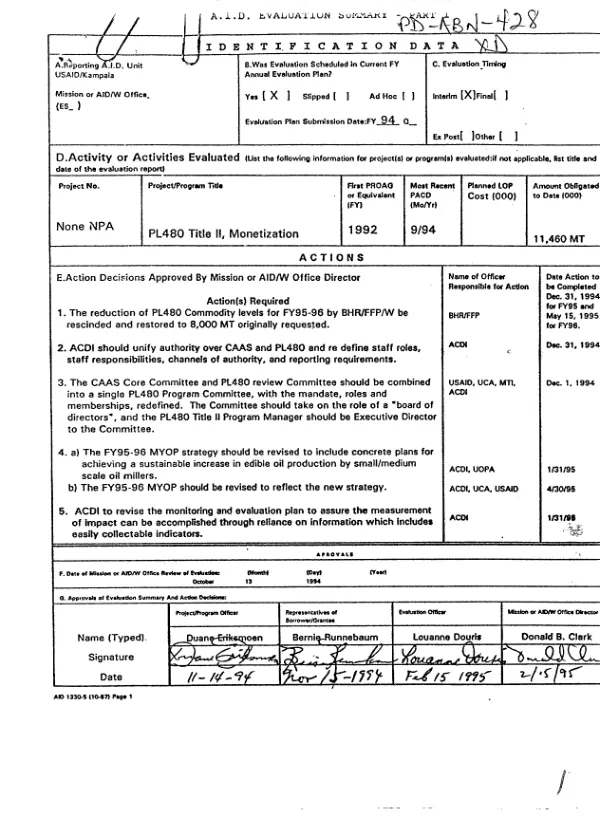
PL 480 Title II, Monetization
Evaluates Phase II (FY 1992-94) of USAID"s P.L.
1995
Sign in to readA free account is required to download.
Abstract
480 Title II monetization program in Uganda. The program, which is being managed by Agricultural Cooperative Development International (ACDI), imports U.S. refined vegetable oil for sale through the private sector to generate local currency for rural/farm credit and loans, and grants for rural/farm projects and training programs, mostly within the cooperative sector. Sales proceeds have totaled the equivalent of $12 million. The program has had a significant positive impact on family incomes and food security. ACDI"s policies and procedures for selling P.L. 480 edible oil improved these impacts dramatically; unlike monetization sales in many other countries, where a negotiated sale to a large parastatal or commercial processor does little to keep prices down or to increase access of the poor to food, the Uganda method of selling and distributing oil to multiple small traders through public tender reduces price fluctuations, increases competition among oil traders, and makes an orderly flow of additional edible oil available to consumers. By viewing the P.L. 480 oil as both a source of revenue and a tool for improving food security, ACDI has produced institutional changes in oil marketing that may continue to yield positive impact long after the project ends. On the down side, while proposed indicators for measuring increased income are sound conceptually, field observation suggests practical difficulties in measurement. Also, no adequate plan exists for achieving a sustainable increase in edible oil production by small- and medium-scale oil millers. The program is not working in tandem with the Cooperative Agriculture and Agribusiness Support (CAAS) Project (6170111). The two projects lack a coordinated strategy and set of activities for achieving sustainable impact, and division of management responsibilities between the two projects has not been explicit, leading to confusion about tasks, authority, and responsibility. With the ending of many CAAS activities, P.L. 480 has become the principal source of USAID assistance to the cooperative movement, indicating the need for the revision of the CAAS Core Committee"s role in managing grant funds. The impact of some matching grants has been limited because grantees have lacked access to working capital. The following lessons have been learned. (1) The Uganda experience illustrates that how oil is sold makes a difference, as well as some of the advantages of monetization over a simple grant of funds. (2) The program confirms what the evaluators have found in some other P.L. 480 monetization programs: when the proceeds of monetization are disposed of by a committee for "approved projects", that committee will too often adopt a project-by-project approach that fragments the pursuit of the program"s overall goal. More guidance to the Committee about the specific goals that projects are to address, along with a tentative strategy for achieving them, will make it easier to fund a combination of projects that is likely to directly benefit specific people. (3) The monetization project dramatizes the importance of sustainability. With Phase III likely to be the last P.L. 480 assistance, the danger that much of the project"s impact will not last becomes more vivid. The need for sustainability makes it especially important that Phase III focus on orderly transition, and include activities, institutions, and impacts that will continue without further USAID support.