CONSULTATIVE GROUP ON INTERNATIONAL AGRICULTURAL RESEARCH (CGIAR)
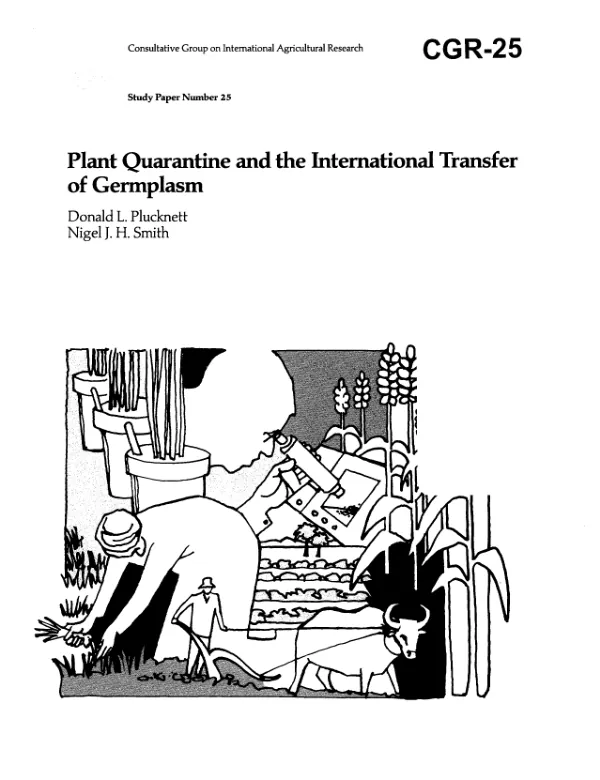
Plant quarantine and the international transfer of germplasm
A concerted, worldwide effort to boost and sustain agricultural yield has greatly increased the demand for new sources of breeding material for crop programs.
Plucknett, Donald L.; Smith, Nigel J. H. · 1970
Sign in to readA free account is required to download.
Abstract
To adapt crop varieties to more difficult marginal environments and to surmount the ceaseless attack of pests and diseases, crop breeders need a constant supply of fresh genes to develop more productive and resilient varieties. The spectacular growth of genebanks, where plant genetic resources are conserved and evaluated, has also accelerated the tempo of plant material exchange. Unfortunately, quarantine services have not always been able to keep pace with the growing volume of international shipments of plant breeding materials, nor the latest changes in virulence and distribution of plant pests and diseases. This paper reviews the history of quarantine services, discusses principles for successful quarantine operations, identifies major constraints to the exchange of plant materials due to quarantine restrictions and procedures, and explores some of the difficulties faced by quarantine services, plant breeders, and genebank curators in attempting to detect diseases or pests and clean up seeds and vegetative materials. We examine diseases and pest screening techniques, with an emphasis on emerging biotechnologies that are revolutionizing diagnostic and cleanup work for plant germplasm. The importance of intermediate quarantine, particularly for tropical cash crops, is underscored. Finally, we analyze ways to strengthen quarantine services worldwide so that crop improvement programs can operate more efficiently and effectively. (Author abstract)