USAID DEC
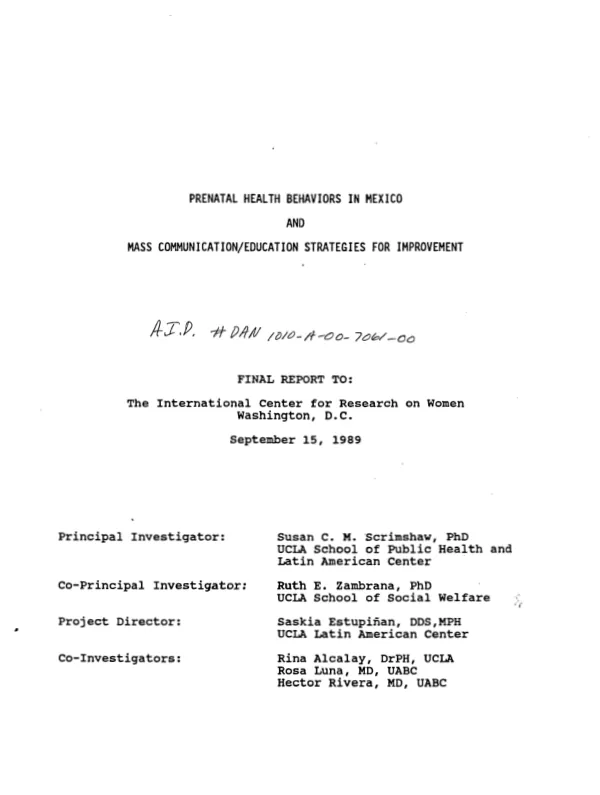
Prenatal health behaviors in Mexico and mass communication/education strategies for improvement
Sign inINTERNATIONAL CENTER FOR RESEARCH ON WOMEN (ICRW)
Prenatal health behaviors in Mexico and mass communication/education strategies for improvement
This project used anthropological and survey research methods to obtain baseline information from 491 pregnant women to design and test public mass media materials for improving health-related behaviors during pregnancy in the U.S.-Mexican Border population.
Scrimshaw, Susan C. M.; Zambrana, Ruth E. · 1989
Sign in to readA free account is required to download.
Abstract
Factors measured were food beliefs, utilization patterns of prenatal care, and sources of health information. Previous research has demonstrated that prenatal care is strongly and clearly associated with improved pregnancy outcomes and prenatal care is especially important for women at increased medical and/or social risk. In developing countries, prenatal care services are scarce and minimal. Existing services provide mainly educational and screening functions unless high risk status is identified. Study results showed that women who initiated prenatal care early in pregnancy were more likely to seek advice from a physician, were more knowledgeable about self-care and risks, and were likely to make more prenatal care visits. Women had inadequate knowledge about their optimum weight-gain during pregnancy and cited anemia as a common problem, as did their physicians in the Tijuana area. Women also reported that their male partners were not supportive about weight-gain and other self-care behaviors. The most desired source of pregnancy-related information was one- on-one small group contact with doctors or nurses in clinic settings. Television, radio, pamphlets, and communicating with relatives were also important information sources. Using focus groups, informational and motivational materials were developed and tested. The project produced prototypes for four communication methods: a consciousness raising poster, a calendar with basic prenatal care messages, a pamphlet with expanded messages, and two songs with messages about the baby"s father"s responsibilities and the mother"s nutritional habits. In addition, it is recommended that radio programs using local physicians for questions and answers be initiated. (Author abstract)